
At home and abroad
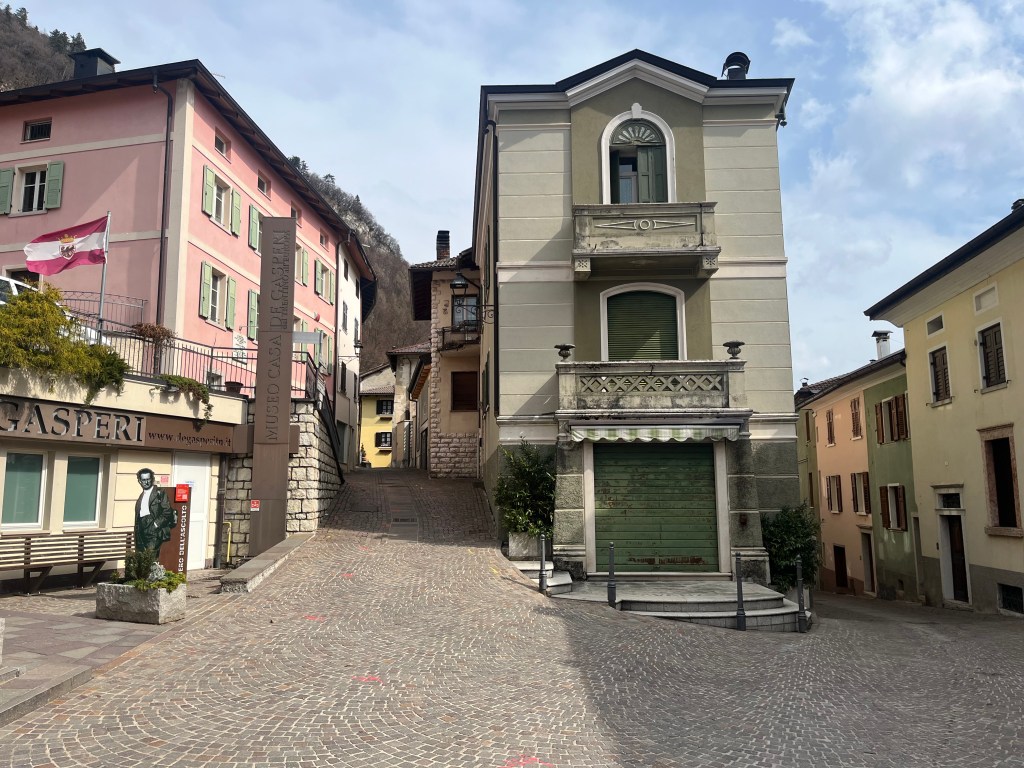
Over the centuries, the Tesino plateau has constantly tested the resilience of its inhabitants. As archive documents record, among the main problems were ‘the barrenness of the countryside and the infertility of the alpine and mountainous landscape’. In spring and summer, the harvests, particularly of cereals, ensured the communities’ survival. The high-altitude mountain pastures ensured a thriving sheep farming industry. However, many raw materials (cereals, oil, wine) had to be imported from the Veneto region. In autumn and winter, once the agricultural and pastoral seasons had ended, most of the male population, from the age around 12, sought to supplement their income with a second occupation: the itinerant trade in flint stones, later replaced by that of printed matter. From their first trips to the Trentino-Tyrol area, the duration of itinerant work lengthened, reaching ever more distant places. This story is told by the Museo Per Via of Pieve Tesino.
Between the 19th and 20th centuries, the Buffa-Giacantoni family lived in the building that now houses the Per Via museum. The complex consists of three pre-existing buildings joined together, a project completed in 1854. Until the 1960s, all of their descendants lived here: Edoardo with his wife Emilia and their children Delfina and Emilio; then Emilio with his wife Lucilla and their daughter Jolanda; and finally, Jolanda with her husband Severino Marchetto. There were also servants, housekeepers and seasonal workers. The house also accommodated servants, housekeepers and seasonal workers who looked after the family’s fields and livestock. Casa Buffa-Giacantoni thus bears witness to the dual role of traders in prints abroad and farmers and livestock breeders that, historically, characterised many families in the Tesino region.
During the 19th century, the Buffa-Giacantoni family opened a stationery and print shop in Koblenz. Edoardo was elected to the municipal council and contributed to initiatives for the development and beautification of the Pieve, though he was unable to pass on the fortunes accumulated abroad to his heirs; these had been invested in government bonds of the Austro-Hungarian Empire, defeated in the First World War.
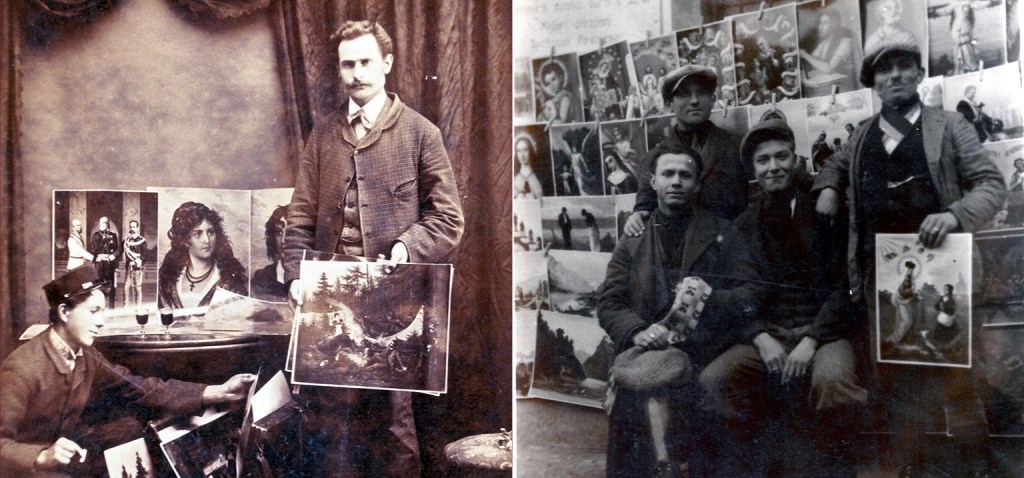
Today the old Buffa-Giacantoni residence houses a museum that brings together artefacts and stories relating to Tesino’s itinerant traders and recounts the history of the images that the inhabitants of the Plateau disseminated throughout Europe and the world, particularly between the 18th and 19th centuries.
Until the mid-20th century, many Tesino street vendors and traders moved permanently abroad. Some were reunited with their families after years of seasonal migration; others did not return for decades or for their entire working lives, returning home only to spend their final days.
In particular, during the decades spanning the late 19th and early 20th centuries, Tesino people travelled to every continent. For example, Sebastiano Avanzo and Daniele Dallamaria travelled with their companies between North and South America, living for long periods in Mexico. Albino Gecele also worked between Mexico and California in the 1880s. Virginio Marchetto, meanwhile, settled with his children in Managua, Nicaragua, at the time of the First World War. His family travelled throughout the Americas, covering the entire Pacific coast. Other Tesino merchants travelled across Asia, particularly the Indian subcontinent. Domenico Lucca, who set out to sell prints, settled in Java and became a hotelier in the early 20th century. Antonio Tomaselli, after travelling through Northern Europe, Scandinavia, India and Australia, settled in South Africa and became the richest man in Johannesburg, returning to Tesino in his old age.
References
Massimo Negri (ed.), I tesini, le stampe, il mondo. Uomini e immagini in viaggio, Edizioni Gabriele Mazzotta, Robbiate (LC), 2014
Niccolò Caramel, Massimo Rospocher (edd.), Print roads. Mobility, print and trade in Europe: the case of the Tesini pedlars (17th-19th centuries), European History Quarterly, 54, 2024, pp. 381-399

