What stories do you want to tell?
- Create an immersive ‘time travel’ experience that expands tangible and intangible heritage. HistoryCity’s team works with you to design a character-led app trail, voiced by actors, that connects the fabric of today’s cities to the lives and events of the past. This 1 min showreel sets out the current features.
- Connect artefacts from museums and archives to the places they were associated with. Additional audio commentary and images at each site ties these objects to the social and cultural worlds that gave them meaning.
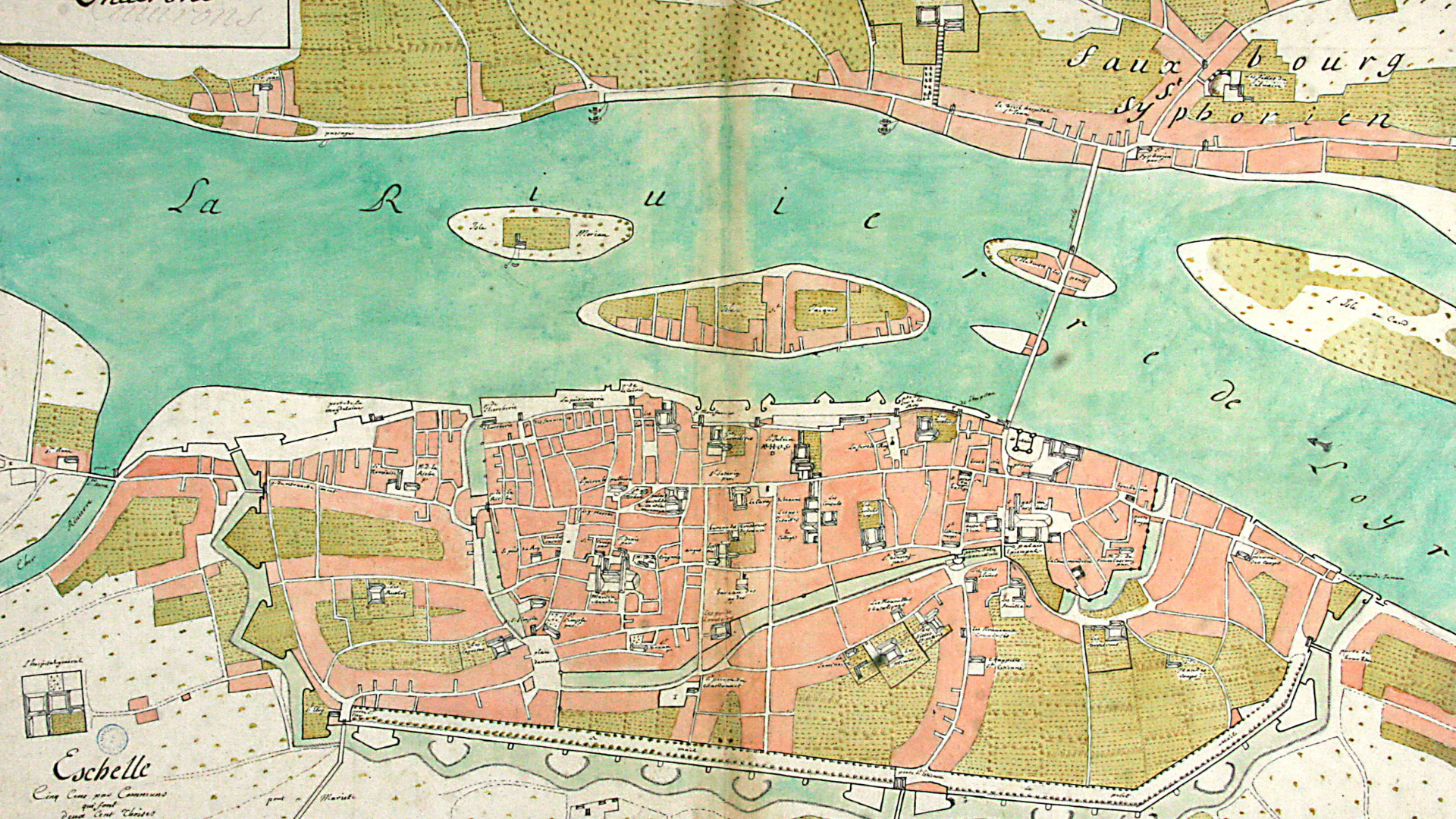
- Choose from two models of our platform: a standalone app for a specific location (eg. Hidden: Venice, Copenhagen, Tours); or a regional or national app into which trails can be placed at multiple locations (eg. our HistoryScapes app for the National Trust UK).
- Our University of Exeter team of historians collaborates with universities, museums, archives, heritage bodies and tourism organisations to develop the mobile storytelling on our apps, which are powered by industry leader Calvium. This brief documentary about the making of Hidden Exeter illustrates the process.
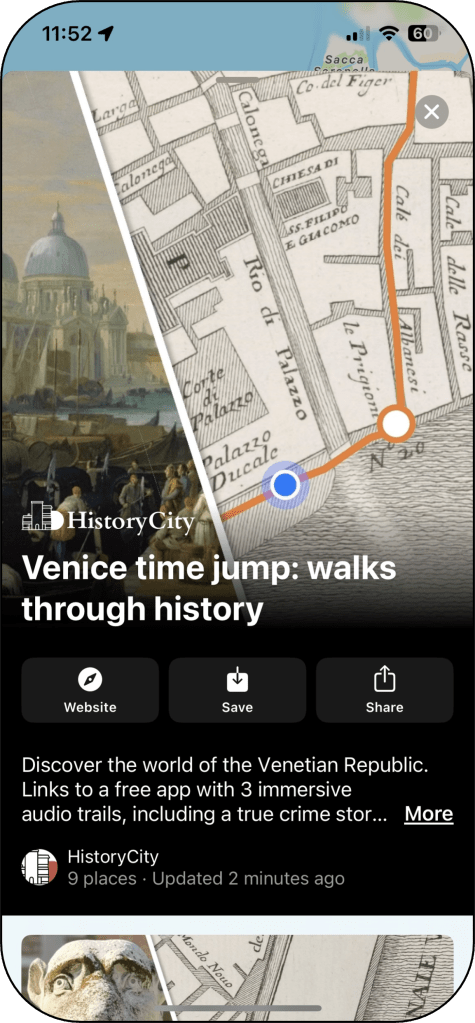
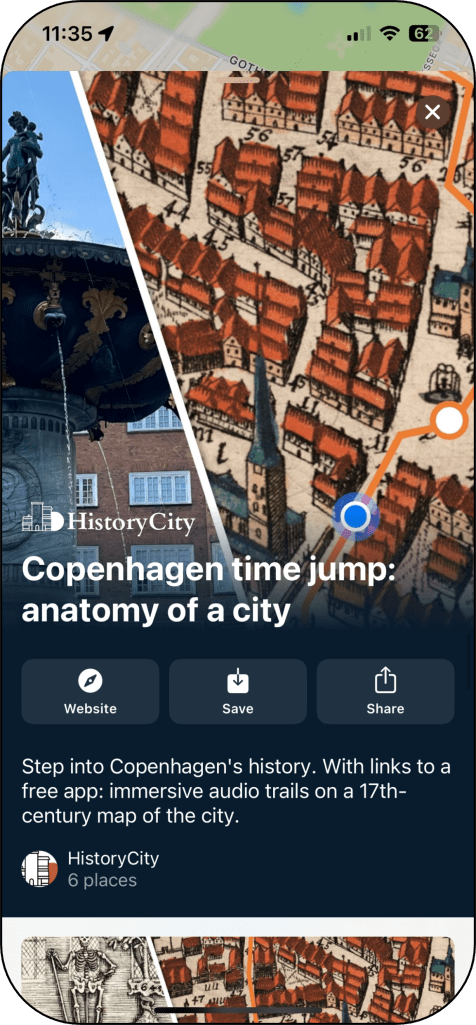
- We produce an Apple Maps guide for each city app. These promote trails and push traffic to the apps on iOS devices.
- Get detailed analytics for impact assessment and in-app survey tools to gather qualitative feedback.
- HistoryCity also has a teaching version of the platform, enabling students to build their own trails and engage with place-based interpretation. See the Education page.
- For more information, get in touch with the HistoryCity team, Fabrizio Nevola and David Rosenthal.
What people say
Working with HistoryCity for Hidden Venice was an amazing and unique experience. It was a wonderful opportunity to be creative with my research and produce something that was both informative and engaging for a public audience. The support and expertise of the HistoryCity team made the whole process run smoothly and produced an app that I am very proud of.
— Celeste McNamara, assistant professor in early modern European history, Dublin City University
Hidden Copenhagen uniquely allows users to experience historical events and archaeological finds exactly where they took place and were discovered, creating a more authentic understanding of the city’s past. In this way, Hidden Copenhagen contributes to increasing the relevance of the museum’s collections and supports its goal of being “The Museum in the City – the City in the Museum.”
— Rikke Simonsen, curator, Museum of Copenhagen
Hidden Landshut has taken the digital offer for locals and tourists around the Landshut Wedding 1475 to a new level. With this app, it is possible to experience the largest historical festival in Europe and immerse yourself in the late Middle Ages, regardless of the fact performances of the festival only take place every four years. The story of the maid Anna appeals to a wide audience and makes it easy for people of all ages to engage with history and historical documents – and have fun at the same time.
— Michael Bragulla, head of tourism, Landshut City Council
This is hugely valuable for historians, because it allows us to take what we have discovered in an archive, in a fragment of history that has been hidden away, and transpose that into real space and see it in three dimensions. In a certain sense to see it as the people who lived that history saw it.
— James Clark, professor of history, University of Exeter
Our participation in the creation of ‘City of the Dead’ and ‘The Sword and the Cross’ for the Hidden Trento app was an effective way of connecting the museum with the city, restoring meaning and context to the collections through the link with urban places and memories. It was a concrete opportunity to build a living relationship between heritage and the city.
— Domizio Cattoi, deputy director, Trento Diocesan Museum
Working with HistoryCity to make Hidden Venice was a wonderful experience. The app went beyond our expectations: we believe it’s an innovative and interactive way of discovering Venice’s history which perfectly fits the mixture of digital, public, and humanities dimensions embodied by our Centre.
— Stefano dall’Aglio, Venice Centre for Digital and Public Humanities
Why HistoryCity?
- Develop locative research and translate it into impactful public history
- Enable students to create their own trails with our teaching version of the app
- Create a diverse and rich heritage offer for visitors and residents
- Give new life to established heritage sites and highlight hidden gems
- Decentralise footfall by promoting sites off the beaten path
- Deepen the connection between museums and the city by ‘relocating’ collection artefacts to their former sites
- Publicise your museum, gallery or exhibition
- Extend relationships with museums, heritage bodies and universities.
Our Partners