
Vices and virtues
By the start of the eighteenth century, Venice was a city of contradictions. The Venetian patriciate felt proud of their centuries-long republican tradition, their famed “libertà,” their imagined serenity. This meant that they held tightly to – and worked fiercely to protect – the myth of Venice, or the image of Venice as La Serenissima, the sober, serious and serene – in the sense of politically tranquil – republic, with a pious, predominantly Catholic citizenry. At the same time, for the rest of Europe, Venice was increasingly seen as a rich man’s playground, a key tourist destination. From the seventeenth century, wealthy young men came through Venice as part of their Grand Tour, ostensibly for the cultural education provided by Venetian art and opera, but also drawn by Carnival, casinos and courtesans.
Nor were the foreigners the only problem – Venice’s own citizens, from nobles down to popolani, were often keen participants in the more salacious activities on offer in the city. At the top, there were many nobles without substantial responsibilities. Venice had a semi-closed political system with strict inheritance laws. Only legitimate sons born to two nobles could participate in the government, and only after the age of 25. Typically only eldest sons married and thus inherited the family property; younger sons were kept waiting in the wings in case of the death of the eldest. By the 18th century, half of patrician men faced these limitations. Many of these men found other outlets for their energy, conducting affairs with or taking advantage of lower-class women, seeking the services of courtesans and other sex workers, and finding entertainment in gambling and theatre or opera performances.
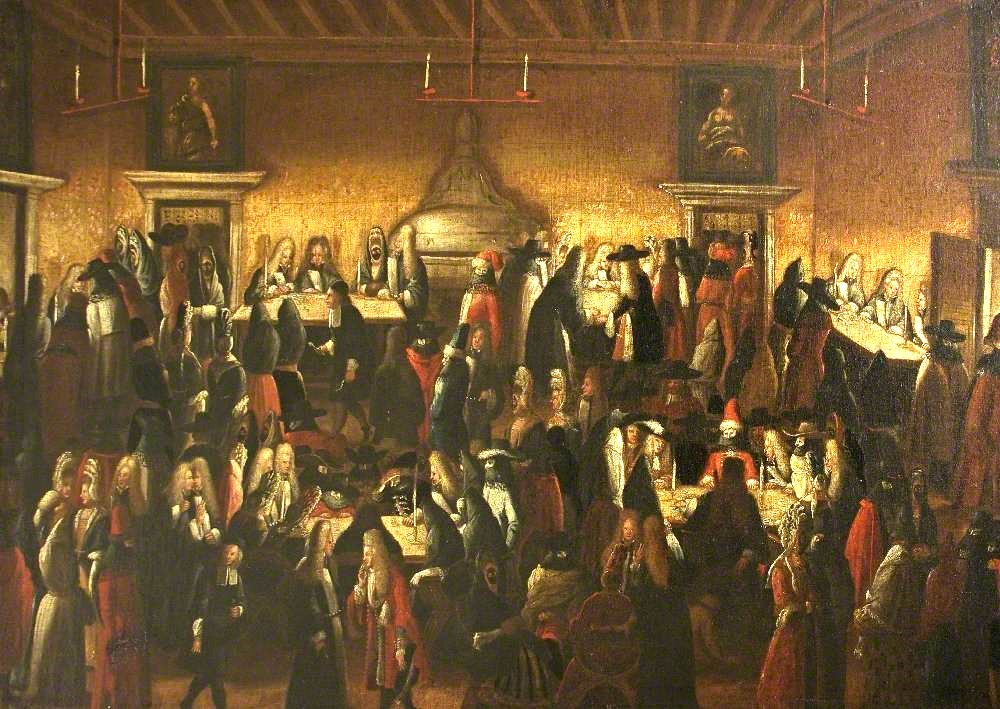
Sons of citizens, Venice’s wealthy professional (but non-noble) class, could also be found among the indolent youth, though familial expectations were different. Ideally they all married and found careers, setting up their own households, but perhaps not until they had indulged in a bit of licentious fun. Finally, the popolani, Venice’s artisan and working class, could also enjoy similar vices, though their limited resources kept them from rubbing shoulders with elites too often at the opera or the casino, and restricted them to the services of a different sort of sex worker.
Concerns over the conflict between the image of Venice as ‘La Serenissima’ and its increasingly libertine culture led to attempted government controls. Those who indulged in illegal pursuits could be hauled before one of more than half a dozen courts and sentenced to severe punishments. The Executors Against Blasphemy was one of these courts, focused solely on moral crimes.
Although nobles and elite citizens unsurprisingly often got away with bad behaviour, some things were sacrosanct, and that included sacred spaces and their functions. Churches and convents were of particular interest to the morality courts; immoral behaviour in secular and mostly male-dominated spaces might be begrudgingly tolerated, but churches and convents were places of refuge for honest Christians – particularly women – and thus were not to be disturbed.
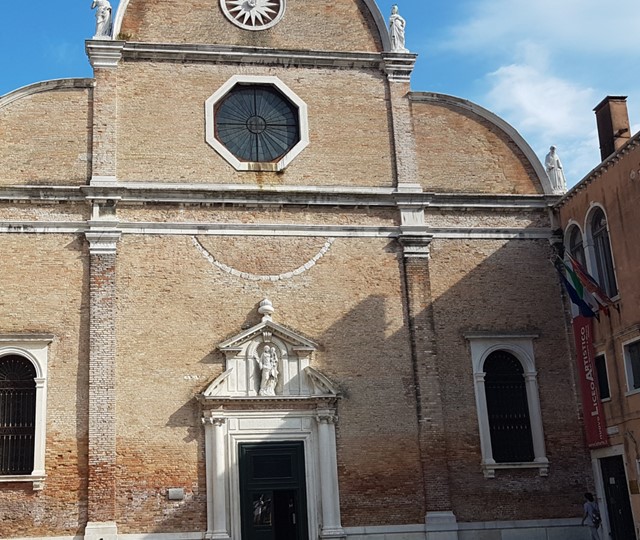
Indeed, for young and unmarried women who belonged to the city’s social elite, church attendance was an outlet from their highly circumscribed lives; they were mostly restricted to their homes, where their chastity and modesty could be protected. Women attended masses, often when men were working, they participated in extra activities such as collective rosary devotions, and they often developed close, emotional connections with their confessors. In the ‘Venice Unmasked’ trail, the Carmini was one of the churches in which women were harassed by the man being pursued by Capitano Zuanne Biancafior. This young libertine’s actions had deeply violated what was meant to be a safe and honourable space for women and turned it into a threatening one.
Celeste McNamara
Further Reading:
Redford, Bruce. Venice & the Grand Tour. New Haven, Yale University Press, 1996.
Rosand, David. Myths of Venice: The Figuration of a State. Chapel Hill: University of North Carolina Press, 2005.
Walker, Jonathan. “Gambling and Venetian Noblemen c.1500-1700.” Past & Present 162 (1999): 28–69.
 HistoryCity Apps