
Venice’s mobile bridges
‘There are two methods for getting about the city of Venice: on foot and by boat,’ wrote the prolific Renaissance biographer of Venetian life, Marin Sanudo.
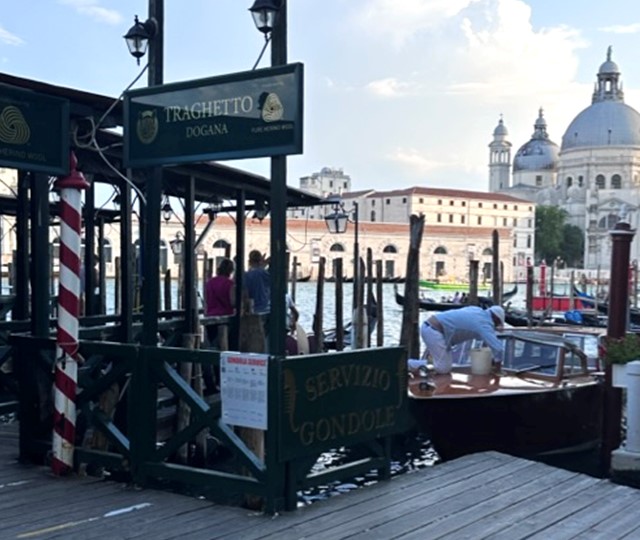
Modern day travellers to Venice will mostly experience the city on foot. Perhaps the greatest challenge to the pedestrian network through the aqueous landscape criss-crossed by more than 400 bridges is the major waterway that bisects the city, the Grand Canal. Historically the only bridge across it was at Rialto – originally a wooden bridge, which collapsed on a number of occasions, until it was rebuilt in stone in 1588 – but instead a network of traghetti kept the city on the move. Low prices and a multiple crossing points ensured the connectivity between the two shores of the Grand Canal, as well as to the Giudecca, San Giorgio Maggiore and other islands.
While in modern times the number of these crossing points has drastically reduced, they are well marked on Ludovico Ughi’s map of the city (used in the Hidden Venice app) which lists 21 crossing points, while there were as many as 40 in the sixteenth century. Barcaroli (boatmen) united as a mariegola (guild) in 1348, but their services are recorded from as early as 1293. Guild regulations of 1577 stipulated the very low fixed fares (a bagattino, low value coin) for a crossing, while boatmen were banned from carrying weapons, gambling or playing cards.
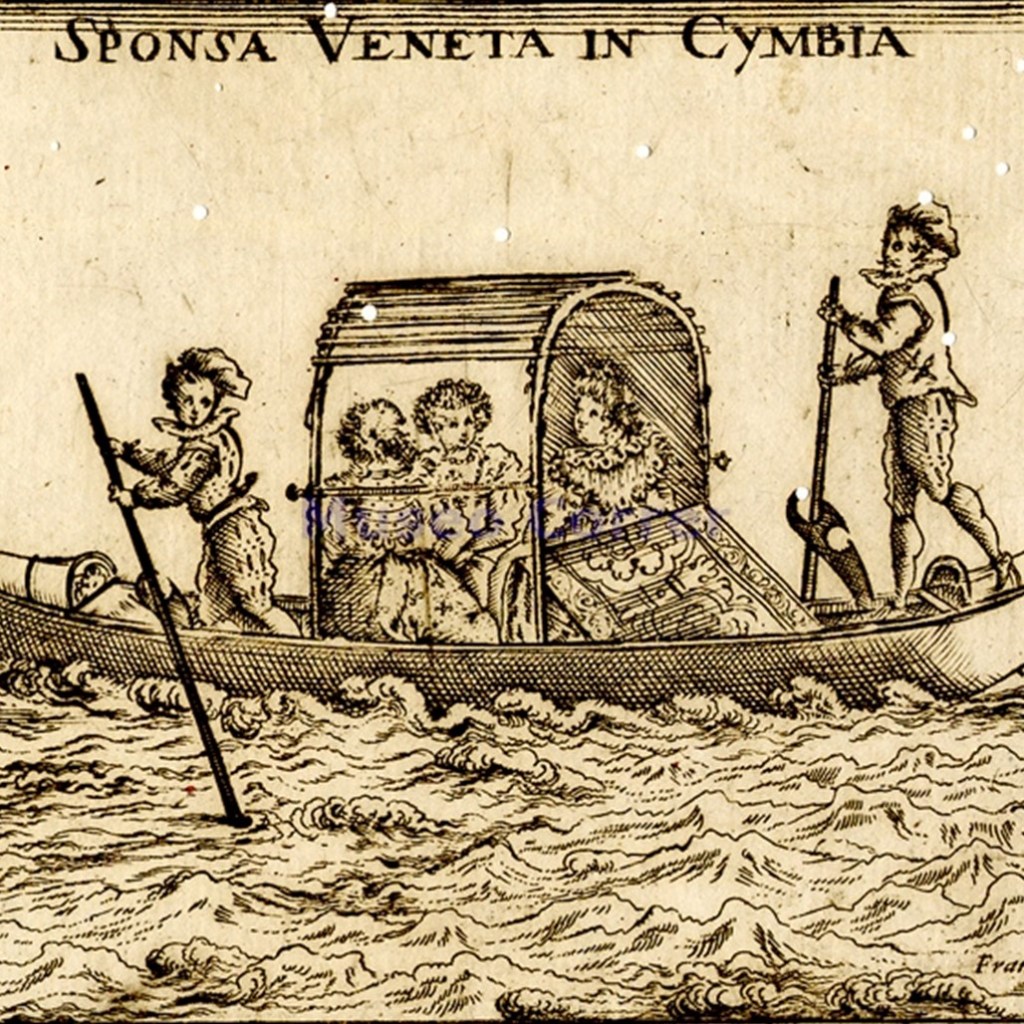
No such controls were exercised on the élites who owned their own gondolas, although during the Renaissance rules were brought in to control the luxury displayed by these private craft. From 1609 gondolas were required to be black, so that display of status was directed at the use of luxury fabrics for cushions and furnishings, as well as the movable canopy (felze). In spite of high fines, the conspicuous display persisted. Again, it is Sanudo that informs us that having and maintaining a gondola was more expensive than keeping a horse on the mainland – and in pre-modern times owning horses was a key status marker. Sanudo’s point is clearly that Venice’s leading families were more wealthy and prone to display than their landlocked counterparts. Like carriages in city streets, gondolas afforded some degree of privacy when the felze were drawn, ensuring discretion for women and men as they moved about the city, propelled by gondoliers who usually wore the heraldic colours of the family.
A significant proportion of the specialised oarsmen were black Africans, some of them enslaved, others freed and employed as members of the household. The distinctive Venetian boats, as much as the oarsmen and the well-dressed occupants, are a regular feature in views of the city, from Jacopo de’ Barbari’s famous 1500 view of the city to Canaletto scenes painted two centuries later.
Fabrizio Nevola
Further reading
Filippo de Vivo, 2016. ‘Walking in Renaissance Venice’, I Tatti Studies in the Italian Renaissance, 19, pp. 115–41
Dennis Romano, 1994. ‘The Gondola as a Marker of Station in Venetian Society’, Renaissance Studies, 8, pp. 359–74 Lowe, K. J. P., 2013. ‘Visible Lives: Black Gondoliers and Other Black Africans in Renaissance Venice’, Renaissance Quarterly, 66, pp. 412–52
 HistoryCity Apps