
Nobles and popolani
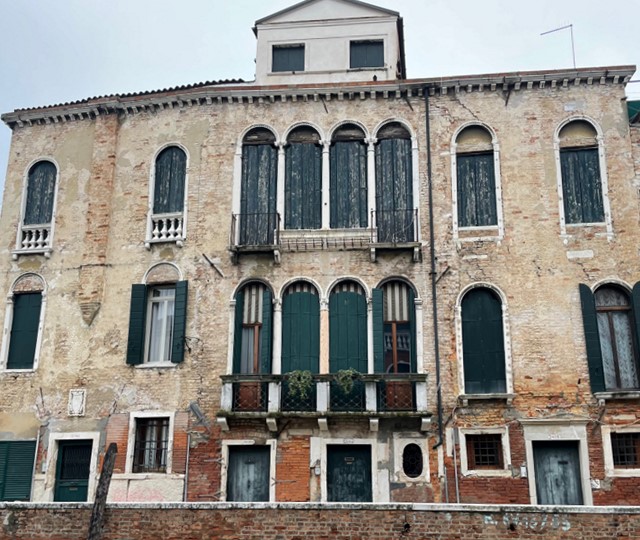
As with most early modern cities, Venetians closely identified with the particular area where they lived. Although then as now Venice was divided into sestieri (San Marco, San Polo, Santa Croce, Dorsoduro, Cannaregio, Castello), this area is too large to be particularly meaningful to most Venetians. Instead it was the parish, and perhaps even the microcosm of the courtyard that mattered most. When asked to describe where they lived, people noted their parish church and some other identifying feature; sometimes this was a street name or a bridge, but often it was ‘near the house of’ the local noble family. Many of the palazzi of noble families had front water entrances and rear pedestrian access; the latter was often on a small courtyard or campo, flanked with smaller or more modest houses and apartment buildings. These were often also owned by the noble family and rented out to popolani. Although proximity certainly did not lead to meaningful socialising, it did extend to familiarity, and everyone living on the courtyard would likely be known to one another.
The noble family in the grand palazzo would not have considered their neighbours friends, but often did accept the role of patron, intercessor, or provider of aid. This is sometimes evident in stories told at criminal trials, in which ordinary Venetians explain the functioning of their neighbourhood, or narrate how they arrived at the court with their particular complaint.
For example, in 1735 a young woman named Santina Badoer complained to the Blasphemy court that she had been seduced under pretence of marriage by Giovan Battista Poloni. Before coming to the court, typically a last resort, her family had tried other methods to get her former lover to marry her as he had promised. Her aunt had approached a local nobleman, Zuane Balbi, and asked him to intervene. Balbi had gone to see Poloni at her request, accompanied by a priest who was a neighbour, and managed to get him to admit to his misdeeds. They were unable to convince him to do the “right thing,” however. Another nobleman, Domenico Molin, also got involved at the request of one of Santina’s relatives. He was a judge of the Signori di Notte al Criminal, another criminal court. He summoned Poloni to his palazzo, informed him that he was obliged to marry her, and when Poloni remained defiant sent the man away telling him to rethink his position. A second summons was no more successful in changing Poloni’s mind. Although unable to solve this problem privately, both nobles and the priest testified in the trial Santina was eventually forced to bring, and Poloni was sentenced to a year in prison or five years banishment, with his release contingent upon him marrying her or providing the substantial sum of 300 ducats to serve as her dowry.
Celeste McNamara
Further Reading:
Romano, Dennis. Patricians and Popolani: The Social Foundations of the Venetian Renaissance State. JHU Press, 1987.
 HistoryCity Apps