
War versus revolution
The defeat of the July 1936 military rebellion in Madrid and other towns and cities left the Republican government in office but not in power. Although the continued loyalty of soldiers and policemen was crucial to the failure of the coup in these areas, the government’s decision to arm the ‘people’ (militants of leftist political parties and trade unions) meant that power lay in the streets.

It is ironic that a rebellion intended to ‘save’ Spain from the Left sparked the most significant revolution in Western Europe since the Bolshevik seizure of power in Russia in 1917. But Spain in 1936 was different. There was no Leninist-style attempt to overthrow the democratically elected government. The Spanish Left was extremely fragmented. Most significant were the anarchosyndicalists (CNT-FAI), the Socialists (PSOE) and the Communists (PCE). They had been bitterly divided over the nature and timing of the revolution even before the summer of 1936. The CNT-FAI wanted to destroy the state, not seize control of it; the PSOE could not decide whether it was better to support or overthrow the ‘bourgeois’ Republic; and the PCE, which had once called for a Soviet Spain, now followed Stalin’s ‘Popular Front’ policy of a cross-class progressive alliance against fascism. These internecine pre-war disputes had occasionally led to violence, although all proclaimed unity in the face of the threat posed by the military rebels.
But even if the government survived, Republican Spain saw sweeping revolutionary change. Leftist organisations confiscated the property of their rightist enemies – defined as ‘fascist’ irrespective of whether they participated in the rebellion – in the name of the ‘people’. They also purged society of ‘fascists’: in the first six months of the conflict, nearly 50,000 were murdered. All leftist organisations took part in killings, although the revolutionary tribunals that orchestrated much of the violence became known by their rightist opponents as ‘checas’ after the Communist secret police force founded by Felix Dzerzhinsky in December 1917. Many perpetrators would later serve the Servicio de Investigación Militar, the military secret police created in August 1937 to combat the Fifth Column.
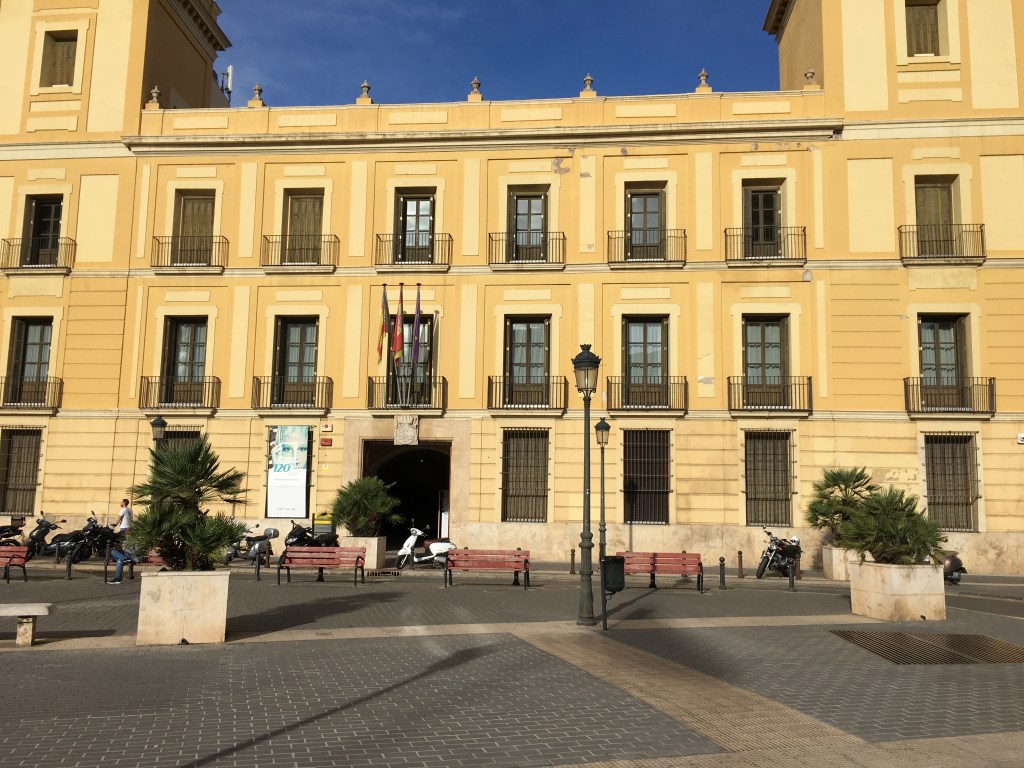
If the antifascist revolution was politically broad-based, memories of past conflicts remained strong within the Left despite the public affirmation of unity. Indeed, the formidable challenges of war and revolution only exacerbated distrust within the Left. As General Franco’s forces advanced towards Madrid in the early autumn of 1936, the PCE insisted the war could only be won by discipline, organisation and political centralisation; the revolution had to wait until victory. Anarchists insisted that the war and the revolution were inseparable. Thanks partly to George Orwell’s Homage to Catalonia, this ‘war v revolution’ debate is one of the best-known aspects of wartime Republican politics, although in reality Orwell simplified the situation. For example, when Franco seemed poised to take Madrid in November 1936, the CNT-FAI joined the government, a startling repudiation of traditional anarchist principles. Nevertheless, mutual suspicion was real enough. The bloody clashes in Valencia that Luis – in the ‘Civil War Stories’ trail – describes between anarchists and communists in October 1936, outside Communist Party headquarters in Plaza de Tetuán’s Cervelló Palace, foreshadowed the more significant conflict in Barcelona the following May.
Julius Ruiz
Further reading
- Franz Borkenau, The Spanish Cockpit. An Eye-Witness Account of the Political and Social Conflicts of the Spanish Civil War (Weidenfeld & Nicolson, 2000).
- Burnett Bolloten, The Spanish Civil War: Revolution and Counterrevolution (University of North Carolina Press, 2015)
- Helen Graham, The Spanish Republic at War 1936-1939 (Cambridge University Press, 2002)
 HistoryCity Apps