
On the city’s edge
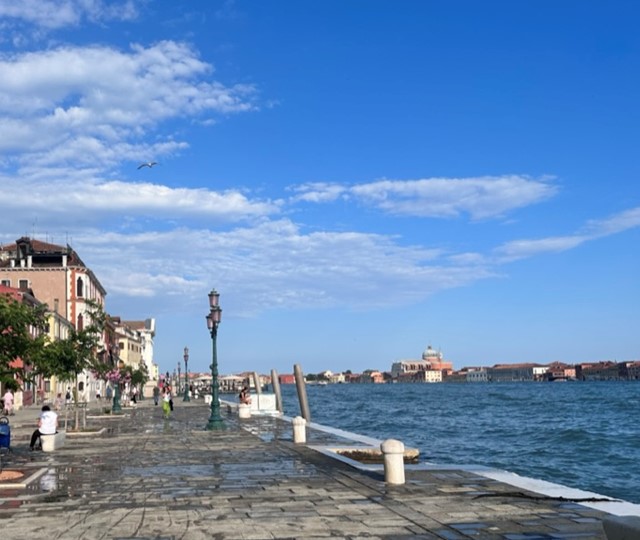
Visitors to Venice, past and present, are “invited” to experience the city from the Bacino di San Marco, the huge watery piazza that extends from the Ducal palace and piazzetta and is enclosed to the south by the island of San Giorgio Maggiore. Here the views of the monumental urban core were spectacular for both arrivals from the open sea, or for those coming from the mainland along the Grand Canal. Instead, the Zattere is a bit like the city’s back door, far less monumental and primarily functional.
As can be seen in the Ughi map used in the Hidden Venice app, by the eighteenth century what been a relatively irregular waterfront and been ordered into a quayside and promenade. This process was initiated by a decree of 1519 that established it as the principal quay for wood brought from the mainland – for shipping, construction, and of course for fuel. Proximity to the mainland was a factor in this choice, but also the desire to limit the amount of workaday raw materials passing through the more prestige trading quay of the Riva degli Schiavoni (see also ‘City of Refuge’, site 1). While very much a secondary waterfront, the Zattere provided a promenade and an extended façade projecting toward the canal and the Giudecca island beyond, where aside from the nineteenth century industrial architecture (the Fortuny factory and Stucky flour mill) Palladio’s church complex of the Redentore (below) is prominently visible. Sociability along this open space was further encouraged as wine from the mainland was also brought to the island city by barge and these would often also operate as impromptu floating taverns, selling directly to passers-by on the quay.
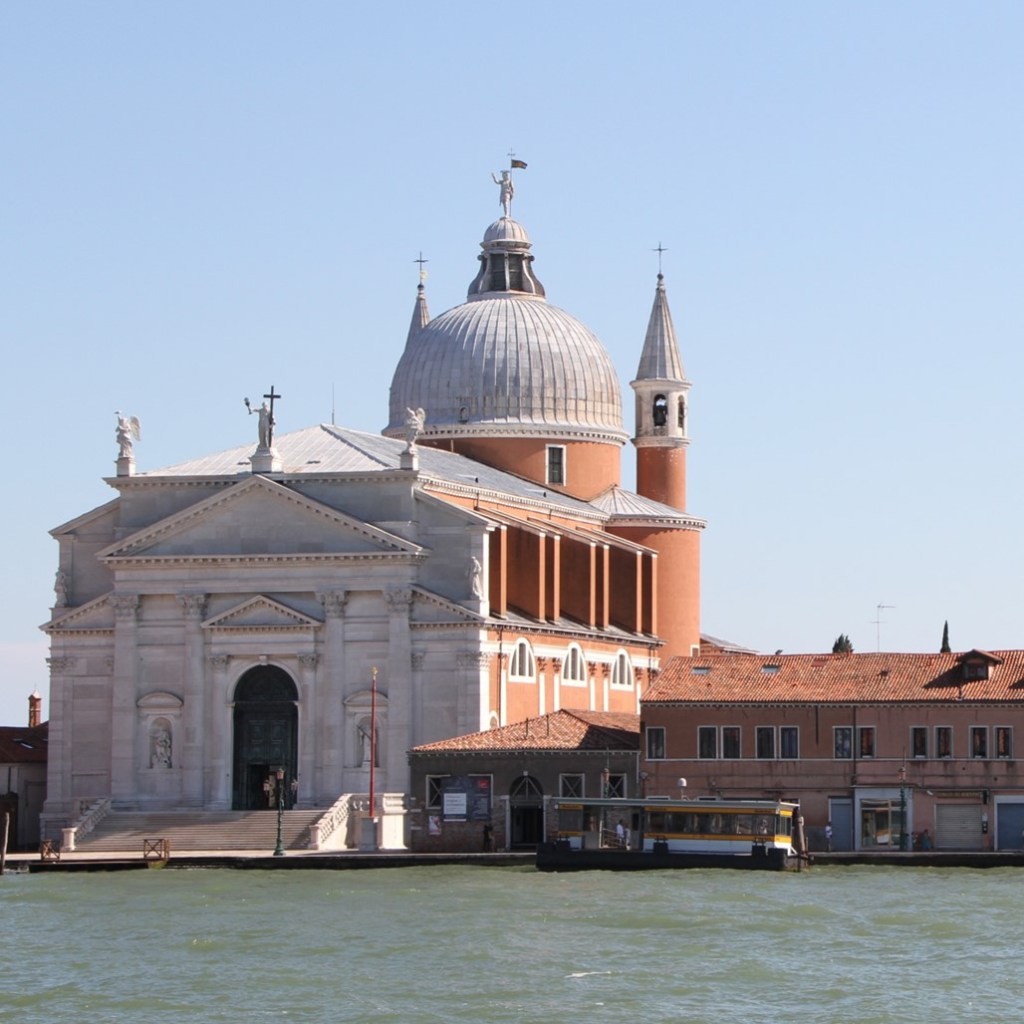
This combination of working quayside, the public space of a promenade and the availability of refreshment could at times result in the sort of factional conflicts more famously associated with the fist fights on bridges. The Zattere was in fact also a border between the rival workers of Nicolotti and Castellani. While it is hard to imagine bull fights in the lagoon city, livestock was also imported into Venice here, and on occasion cattle and bulls might be let loose by the Nicolotti bargemen to wreak havoc on their rivals, the Castellani.
Fabrizio Nevola
Further reading
Robert C. Davis, ‘The Trouble with Bulls: The Cacce dei Tori in Early Modern Venice’, Histoire Sociale/Social History 29 (1996), 275-90
Rosa Salzberg, ‘Little Worlds in Motion: Mobility and Space in the Osterie of Early Modern Venice’, Journal of Early Modern History, 25 (2021), pp.96-117.
Daniel Savoy, Venice from the Water: Architecture and Myth in an Early Modern City (New Haven and London: Yale University Press, 2012)
 HistoryCity Apps