
Gammeltorv square: the civic centre
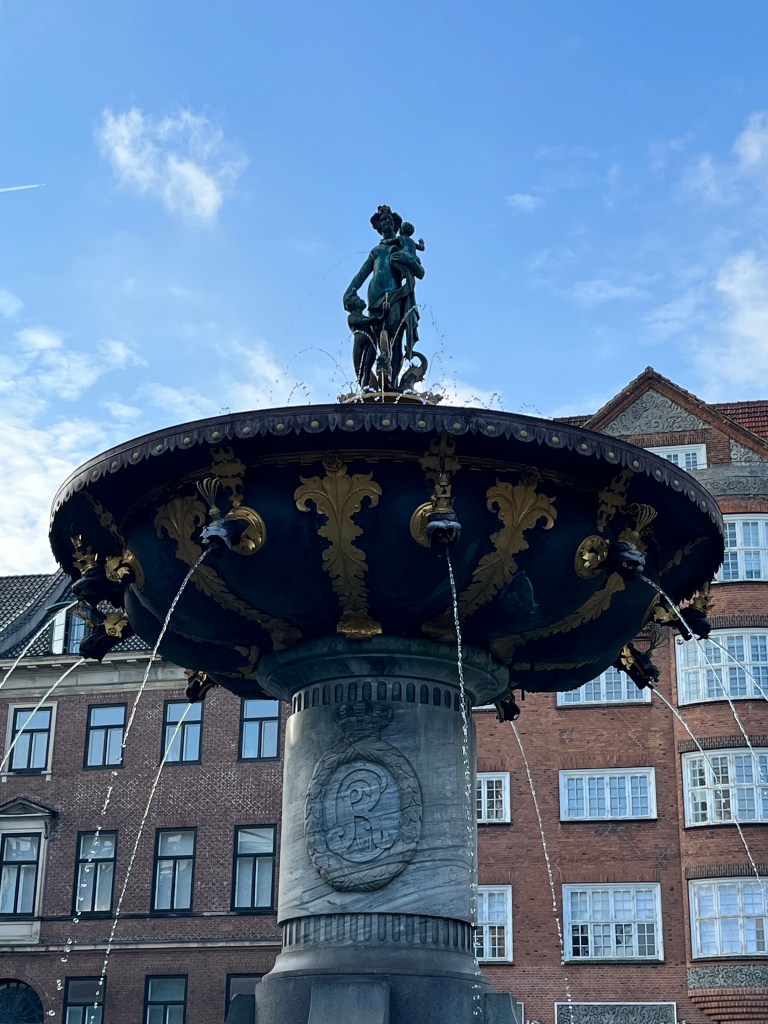
Gammeltorv was Copenhagen’s oldest and most important square. The square had been the city’s main square and the location of the city hall since the late Middle Ages. The city hall was located along the southern side of the square, while the other three sides were surrounded by larger town houses inhabited by people from the city’s upper middle classes: mayors, aldermen and civil servants, as well as merchants, grocers and brewers. People with power and money lived here. Thus, the square was one of the city’s most important official ceremonial places. Here the people of Copenhagen – high and low – could watch the processions of the artisans’ guilds, jousting, tournaments and street entertainment.
In the past, the square had also been the place of the city court, where the city’s legal proceedings took place under the open sky. Moreover, the square was the setting for beheadings, floggings and other physical punishments for major or minor offences. In the early 1600s, however, trials and penalties in the square stopped as the city court and courthouse were moved to the nearby, newly created Nytorv (New Square). The Nytorv was established during the rebuilding of the city hall in 1608-10 when King Christian IV ordered the area behind the city hall to be cleared. Until then, the breeding farm with the city’s stabled breeding bulls had been located here, along with several smaller houses. The houses had been used as accommodation for municipal employees such as police officers, guards, bailiffs, and executioners.
Gammeltorv also had a more informal function, as it was the centre of the city’s market. Several times a week, farmers from the surrounding countryside came to Gammeltorv to sell everything from eggs and poultry to vegetables, fruit and cereals to the people of Copenhagen. Meat could be bought from the butchers on Nytorv. The squares echoed with the loud sales pitches and shouts of the traders, while the smell of the goods mingled with the ubiquitous gutter stench of the city, a delightful mixture of urine, faeces and waste from the city’s countless small craft businesses. In other words, Gammeltorv and Nytorv offered a bit of a sensory bombardment.
In the middle of Gammeltorv stood the Caritas well. There had been a well in the square since the 16th century, but when city hall was renovated in 1608-10, Christian IV moved it to the front of the building and made it into a fountain. He commissioned bronze sculptor Peter Hoffmann to make the fountain’s bowl and figure group, which depicts the one-metre-tall allegory of charitable love, Caritas, with her children. The model for the figure group was made by the sculptor Statius Otto.
The fountain was the King’s gift to the city. But it was not just for decoration. Copenhageners were far more interested in the sizeable octagonal well than the fine bronze statue. Here they could draw the city’s best and freshest water for everything from washing to cooking. The fountain was a vital part of the city’s water supply. The water for the fountain came from Emdrup Lake and was piped into the city and the fountain through hollow tree trunks. The difference in level between the lake and the city made it possible to let the water spring.
Peter Wessel Hansen
Further reading
Carl Bruun: Kjøbenhavn, vol I-II, 1887-1890.
Rikke Simonsen: Kongens by. København og historien, vol. 4, 2022.
 HistoryCity Apps