
The Left divided: communists, socialists, anarchists
In Homage to Catalonia (1938), George Orwell presents a powerful narrative of a perplexed man on the run from unknown enemies. In June 1937, the British writer fled Barcelona for being a ‘Trotskyist’.
One of the paradoxes of the Republican war against the Fifth Column is that some antifascists were accused of being in the pay of the Francoists. They included foreigners like Orwell who did not fight in the Communist organised International Brigades, preferring to join anarchist or POUM militia units. The POUM was an anti-Stalinist communist party that was strong only in Catalonia. It has been frequently called ‘Trotskyist’, but Leon Trotsky himself was very critical of the party. Even so, the POUM broadly shared the exiled Soviet leader’s views of both the 1917 Revolution and the Spanish Revolution. Both had been betrayed by Stalin. The dictatorship of the proletariat, the POUM believed, had become the tyranny of one man in the Soviet Union, and the increasingly powerful Stalinist movement in Spain sought to destroy the popular revolution and impose single-party rule. For that reason the POUM participated in the ‘May Days’ in Barcelona in 1937, when over 200 people died in clashes between the police and revolutionaries convinced of the existential danger of Stalinism.
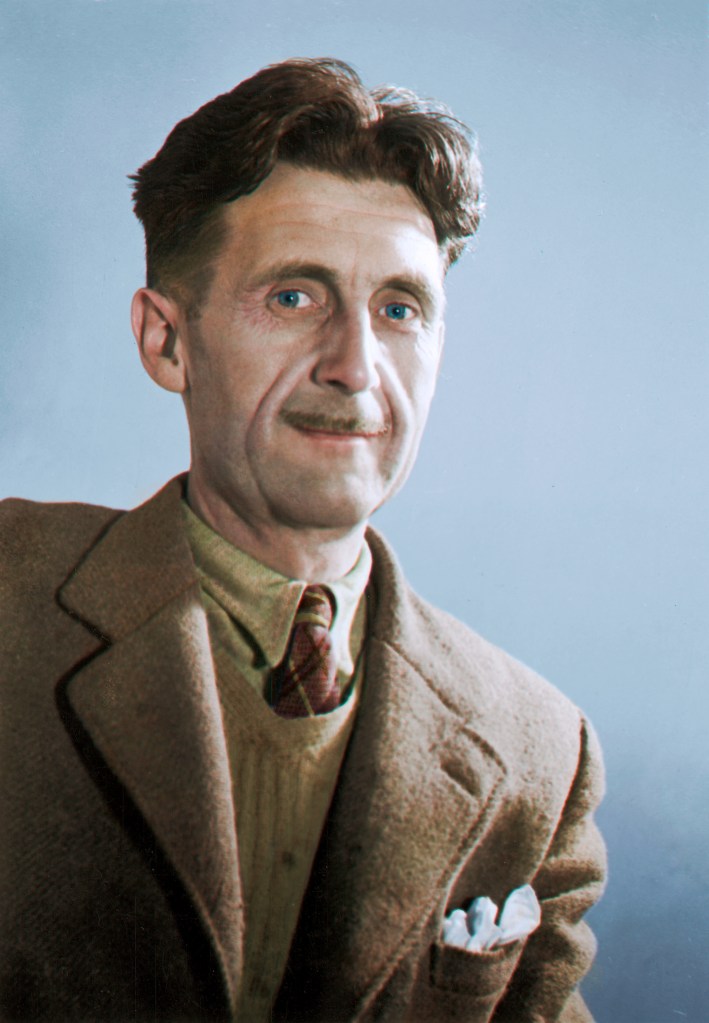
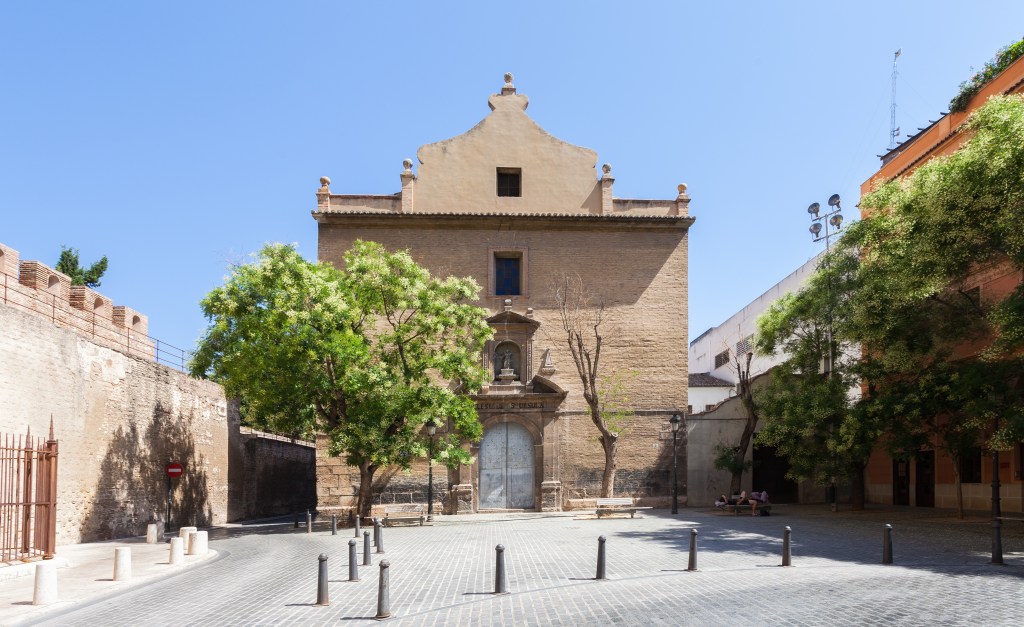
Orwell was involved in the street fighting as part of the POUM militias, and Homage to Catalonia presents a powerful account not only of the ‘May Days’ but also of the ‘revolution betrayed’ thesis that moved many of his comrades. Yet 85 years later, this interpretation presents a number of problems. It is certainly true that Stalinist communism grew into a mass movement. It is also the case that Stalinist paranoia about Trotskyism was imported into Republican Spain as part of the Soviet aid package. NKVD (later the KGB) agents under Alexander Orlov arrived in the autumn of 1936 determined to persecute the ‘Trotskyite’ POUM. This is entirely logical given that the ‘Show Trials’ of Old Bolshevik leaders in Moscow such as Zinoviev and Kamenev that summer had ‘proved’ that Trotskyism was in league with international fascism. The NKVD’s greatest ‘success’ was the murder of POUM leader Andres Nin in June 1937. By then, Valencia’s Santa Ursula prison was under the control of Orlov and foreign communists, and it was where so-called Trotskyites might find themselves incarcerated. But by October that year this grim secret prison was mainly full of Francoist sympathisers.
Even so, was the revolution really betrayed? Spanish communist leaders like Dolores Ibárruri, ‘Pasionaria’, always claimed that they were the true revolutionaries. While obediently following Stalin’s policy of the ‘Popular Front’ (a progressive inter-class alliance against fascism), they called for a ‘democracy of a new type’. This was hardly liberal: it would exclude anyone deemed to be ‘fascist’. Yet communists never dominated Republican Spain. Other antifascists had powerful reasons to support the persecution of the POUM. The POUM had called for another 1917 in Spain- the revolutionary overthrow of the government- but was far too weak to carry out a Leninist coup. Indeed, its very weakness made it a useful scapegoat following the Barcelona ‘May Days’. The majority of those on the barricades were members of the anarchosyndicalist CNT-FAI, but the new Negrín Government was anxious to ensure the continued cooperation of that mass movement with the war effort and pinned responsibility on the POUM.
The repression of ‘Trotskyism’ increased bitterness within the Left. Revolutionaries were incarcerated rather than murdered – the killing of Nin was not representative – and highly articulate prisoners with good international contacts launched an effective campaign denouncing their treatment. If the Republican cause was about the defence of liberty against fascism, why was it persecuting antifascists?
Julius Ruiz
Further reading
- George Orwell, Orwell in Spain (Penguin, 2001)
- Stanley G. Payne, The Spanish Civil War, The Soviet Union and Communism (Yale University Press, 2004)
- Manuel Aguilera Povedano,Compañeros y camaradas. Las luchas entre antifascistas en la Guerra Civil Española (Actas, 2012).
 HistoryCity Apps