
Prosperity and development
The Tesini in Europe. Europe in Tesino. Throughout the 19th century, the renovation or construction of private buildings, the creation of new public spaces, and the building of public administrative and hospitality facilities in the three villages of Pieve, Castello, and Cinte bear witness to a newfound prosperity, a cosmopolitan outlook, and a desire to protect and promote the homeland as a tourist destination while investing in its cultural and social development.
From an architectural perspective, eccentric touches emerged and were joined to local tradition: for example, Villa Daziaro in Pieve, built between 1854 and 1874, with references to Russian dachas and Venetian villas; or Villa Tomaselli in Castello, whose enclosed wooden terraces blend the style of an Empire chalet with 19th-century French pavilions.
The skills acquired throughout Europe, along with the remittances and donations of emigrants, fostered the early development of the three communities and the funding of major public institutions. In the 1880s, a hospital, a nursery school, and a social dairy were built in Pieve Tesino. In 1902, the new hydroelectric plant on the Grigno River brought street lighting to every home, many years ahead of other facilities in Austro-Hungarian Trentino.
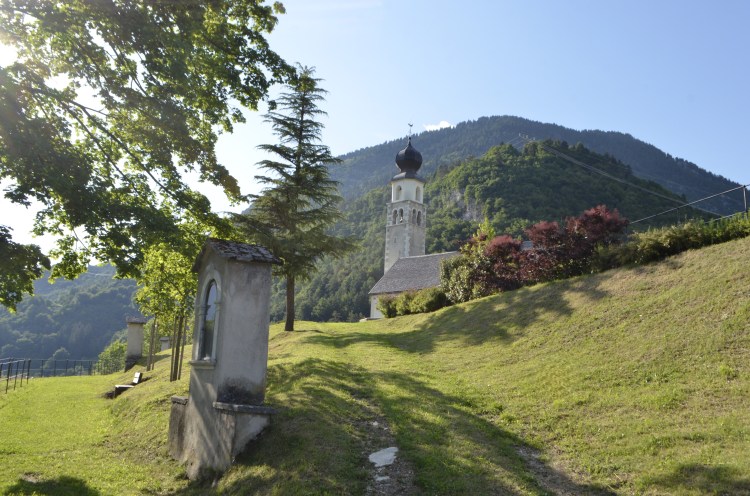
For tourist accommodation, the Hotel Tesino was built in 1883 with funds from wealthy Tesino merchants living abroad and managed by a company established in February, 1885. Two so-called “beautification societies” were subsequently established, one focused on the hill of San Sebastiano in Pieve, the other on that of San Rocco in Castello, which aimed to monumentalize public spaces and make them accessible to visitors to the plateau. The Society for the Beautification of the Hill of San Sebastiano in Pieve, founded in 1881 on the site of this 15th-century church built as a votive offering after an epidemic of plague, changed its name and became a Pro Loco in 1925. It is considered the first institution of its kind in Italy.
The remittances and development projects promoted by those who had achieved success abroad also affected the educational sector. In fact, the brothers Giuseppe and Giacomo Daziaro repeatedly requested in the 1860s to finance the teaching of commercial subjects and, above all, the teaching of foreign languages (German, French, English, and even Russian) in the elementary school of Pieve Tesino. The initiative, intended to train new sales agents from Tesino to be employed primarily in the Daziaro stores, never came to fruition; however, language classes were held in Pieve Tesino during the 19th century, demonstrating the strong European presence that some families on the Plateau had established after two centuries of itinerant trade.
References:
Ierma Sega (ed.), Les hommes des images: l’epopea dei Tesini dal Trentino per le vie del mondo, Regione autonoma Trentino-AltoAdige, Trento 1998 (2003)
Elda Fietta Ielen, Con la cassela in spalla. Gli ambulanti di Tesino, Priuli & Verlucca, Ivrea (TO), 1987 (2008)
Manfredo Marchetto, L’officina elettrica del Tesino dalle origini alla cessione (1899-1957), Litodelta, Scurelle (TN), 2022

