
The Venetian stage
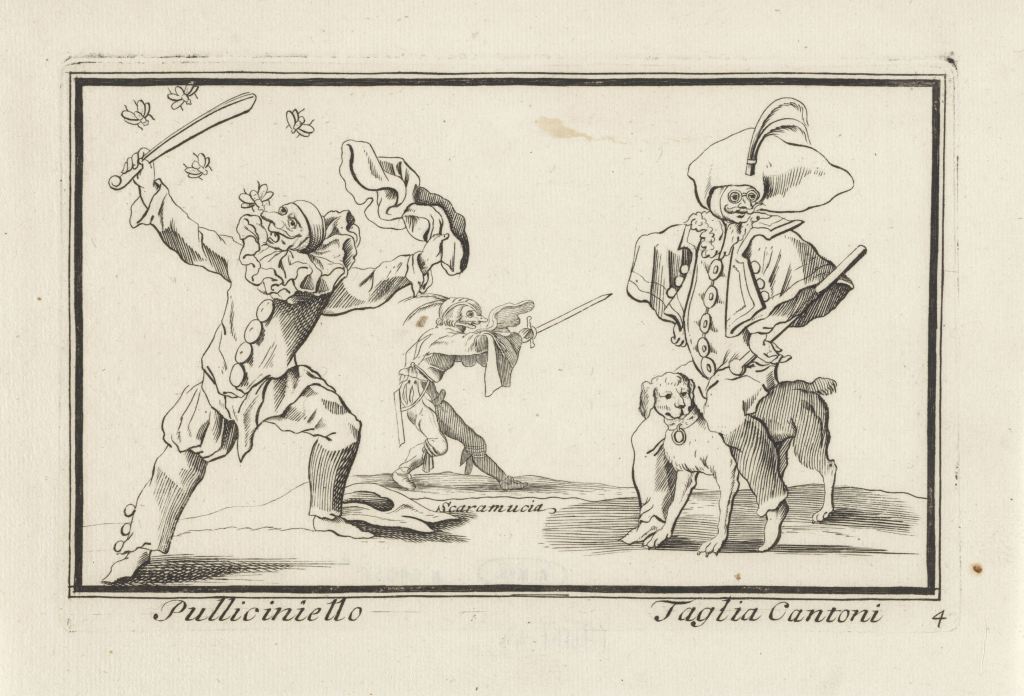
Venice had a thriving public theatre scene as early as the sixteenth century. In the earliest theatres, the performances were comedies, in the commedia dell’arte style. These performances were improvised comedy sketch shows with stock characters. Fairly standardized costumes (and masks for most characters) made them recognisable to audiences. There were four different types of characters (each with a number of individual personalities). There were zanni (clowns), who played servants; these include the famous characters of Arlecchino (Harlequin) and Pulcinella. There were vecchi, or old men; these were wealthy and often comically dull, such as the blowhard doctor character known simply as il Dottore. There were also capitani (captains), who were authoritative but also often braggarts or imperious older women. Finally, there were the innamorati, the lovers, who were young, beautiful elites, and who were the only characters who never wore masks. This form of theatre could be performed in the streets or inside public theatre buildings, and shows were typically performed by traveling theatre groups. Obviously street performances were the most accessible, but theatres were open to all paying customers, and cheap seats high in the balcony were available. Gondoliers got in for free!
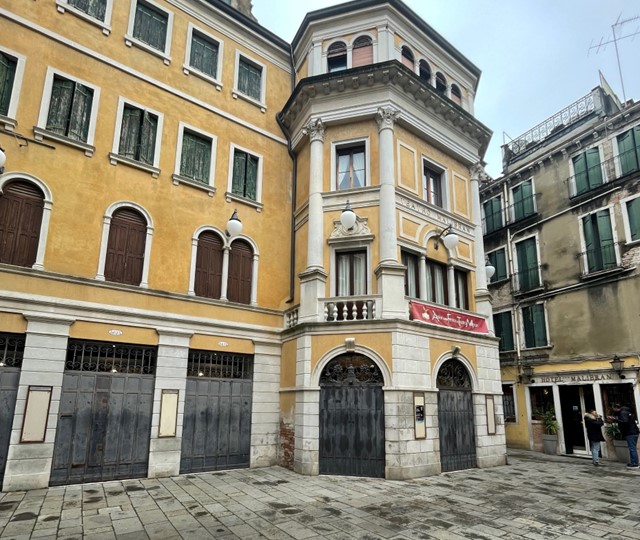
Around 1600, the art form of opera began in Florence, but there (and elsewhere) it was performed for small audiences at court, not for the public. The first public opera was performed in Venice in 1637 in the Teatro San Cassiano, also known as the Teatro Tron (in reference to the noble family who owned it). It proved to be a great success, and opera took off in Venice. By 1650, only 13 years later, nearly 50 different operas had been performed in Venice. The theatre at this site (pictured) is Teatro Malibran, built in 1678 and known then as the Teatro San Giovanni Grisostomo and owned by the Grimani family. Many of the theatres were named after the closest parish church. The Teatro San Giovanni Grisostomo was the most luxurious theatre of its day, and premiered many operas in the eighteenth century, including Handel’s Agrippina in 1709.
Although other cities also began to offer public opera, Venice remained the prime destination for the opera fan, and attending the opera was a key part of any Grand Tour stop in Venice. As opera grew in popularity and more theatres began offering performances, it also became more affordable; whereas the first performances were largely limited to elite audiences, by mid-century there were sufficient performances to make the cheap seats up high affordable, just as they were in comedy performances.
By the late seventeenth century, there were ten theatres in operation in Venice, offering both Venetians and foreign visitors a range of options, including opera seria (serious opera), opera buffa (comedic opera), and commedia dell’arte. In the eighteenth century, there were increasingly other comedy plays on offer as well, most famously those written by Carlo Goldoni (1707-1793), a much beloved playwright whose witty plays offer insight into eighteenth-century Venetian culture. All of the different types of theatre were attended by a wide range of Venetians as well as foreign visitors. In addition to entertainment, theatres were valued as a place to see and be seen in society.
Celeste McNamara
Further Reading:
Barricelli, Franca R. “‘Making a People What It Once Was’: Regenerating Civic Identity in the Revolutionary Theatre of Venice.” Eighteenth-Century Life 23, no. 3 (1999): 38–57.
Glixon, Jonathan, and Beth Glixon. Inventing the Business of Opera: The Impresario and His World in Seventeenth-Century Venice. Oxford: Oxford University Press, 2006.
Rosand, Ellen. Opera in Seventeenth-Century Venice: The Creation of a Genre. University of California Press, 2007.
 HistoryCity Apps