
Visions of Spain and the road to war
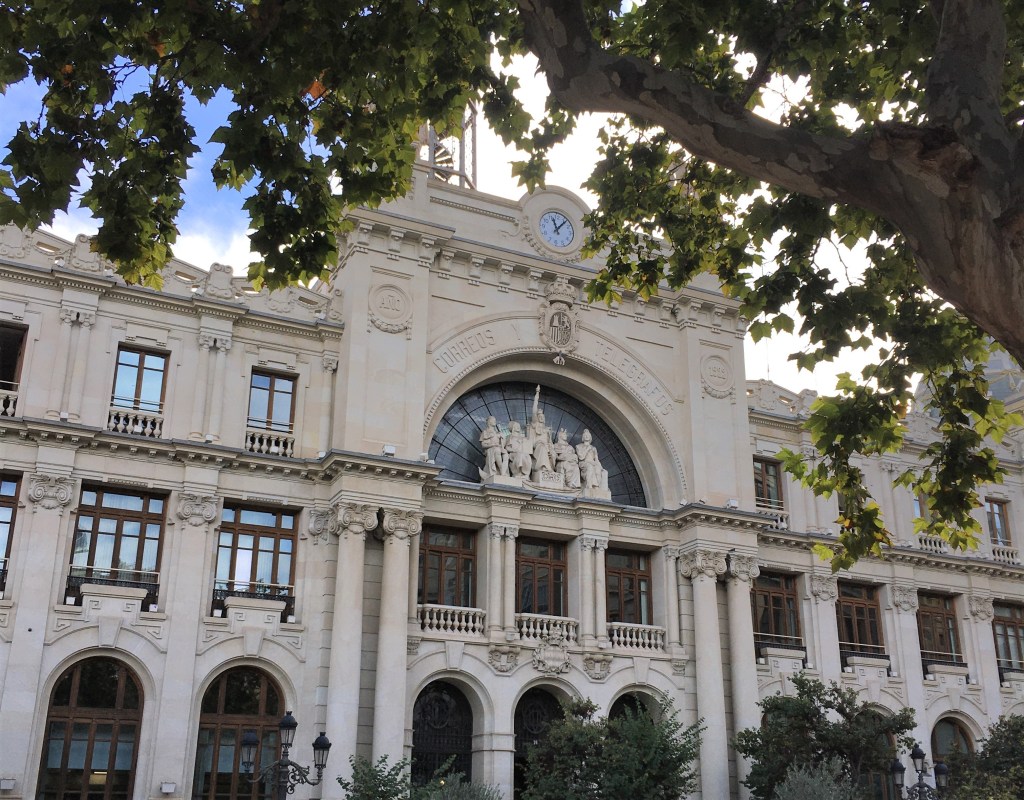
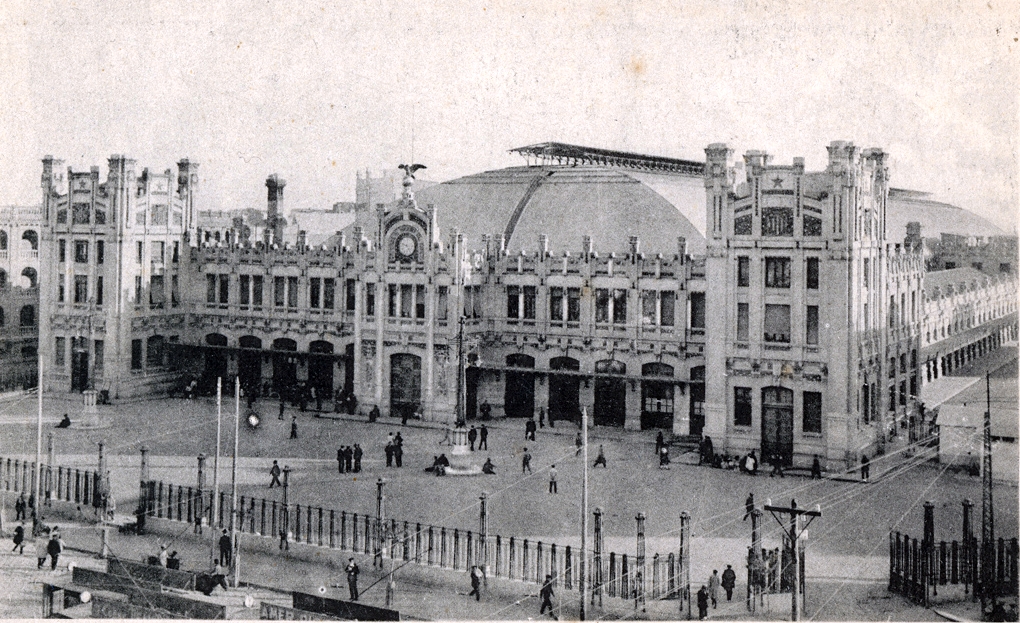
Spain underwent rapid change in the fifty years before the proclamation of the Second Republic in April 1931. Despite mass emigration to Latin America, the population grew from 18.6m in 1900 to 23.6m in 1930. Death and infant mortality rates significantly declined, and average life expectancy increased for men from 38.4 to 48.4 in the same period; women lived longer still. Urbanisation meant that for the first time in Spanish history, a minority of the population worked in agriculture in 1930. This was also a cultural golden age, as writers, intellectuals and painters such as Miguel de Unamuno, Federico García Lorca and Pablo Picasso made their mark at home and abroad. Until 1923, a liberal constitutional regime guaranteed freedom of speech, and manhood suffrage was introduced as early as 1890. Valencia’s Post Office building, the focus of this stop on the trail, as well as the Central Market and the Northern Railway Station, are art nouveau buildings from the early twentieth century. They attest to the climate of urban modernisation.
Yet many Spaniards felt as though they were living in a time of crisis. Economic growth, although impressive enough in Spanish terms, was not as great as other European countries like Britain, France and Germany. Peasant and working-class movements called for a revolutionary transformation of society, while governments were narrowly based, frequently divided and short-lived. Moreover, with the emergence of Basque and Catalan nationalism, the very future of Spain seemed to be in jeopardy. In September 1923, General Primo de Rivera overthrew the government and installed a dictatorship.
To some degree, discontent was evidence of change. An improvement in living standards only produced greater expectations. However, it also reflected profound loss. As noted at Site 1 in this trail, in 1898 Spain lost Cuba. In an imperialist age, what was Spain if she was not an empire? Calls for ‘regeneration’ were legion, but there was no consensus about the disease, let alone the cure. Primo de Rivera’s ‘revolution from above’ ran out of steam in 1930, and Republicans took power in April 1931 promising to transform Spain into a modern European nation. The mass celebrations accompanying the fall of the monarchy gave a misleading impression about the extent of enthusiasm for change, for no one was quite sure what the Republic would bring.
The anticlerical nature of the 1931 Constitution suggested to many Catholics that their faith and the Republic were not compatible. By the spring of 1933, a powerful mass Catholic movement, the CEDA, had been created to revise the Constitution. Nationally led by Gil Robles, it contained regional federations such as the DRV in Valencia. Republican democracy became patrimonial. The Spanish Left saw the CEDA as an existential threat to the secular Republic; the CEDA saw the Left as an existential threat to Catholic Spain. The former could not accept its electoral defeat in November 1933, and the Socialists launched a revolutionary insurrection the following October to prevent the CEDA from entering government.
Although it was a failure, the suppression of the revolution was particularly bloody in Asturias, and the February 1936 election turned into a de facto referendum about the legacy of ‘October’. Did its failure mean that victory in the polls represented the last chance to save the Republic? Or was victory in the polls necessary to confirm for all time the Left’s defeat in 1934? While the left-wing Popular Front won, the margin of victory in terms of votes was so narrow that many on the right claimed that the election had been stolen. This did not make the civil war inevitable – this was only evident after the military rebellion failed – but it was more proof that democracy was merely a means to a certain idea of Spain, rather than an end in itself.
Julius Ruiz
Further reading
- Henry Buckley, The Life and Death of the Spanish Republic: A Witness to the Spanish Civil War (Bloomsbury, 2020)
- Manuel Álvarez Tardió & Fernando del Rey Reguillo (eds)., The Spanish Second Republic Revisited: From Democratic Hopes to Civil War (1931-1936) (Sussex Academic Press, 2012)
- Edward Malefakis, ‘The Second Republic: A Noble Failure?’ in Nigel Townson (ed.), Is Spain Different? A Comparative Look at the 19th & 20th Centuries (Sussex Academic Press, 2015)
 HistoryCity Apps