
The Greeks and their church
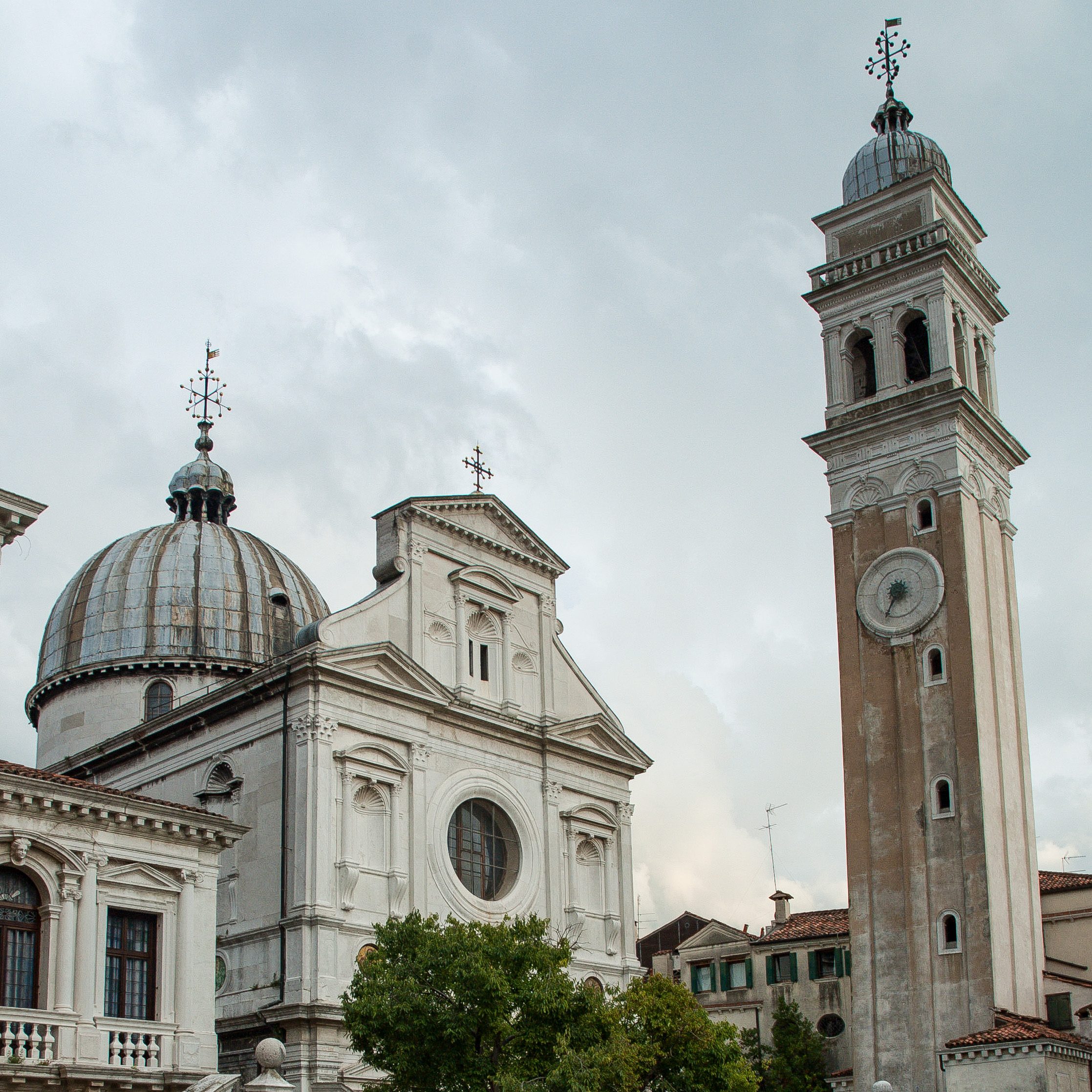
Venice’s Greek community was one of the city’s largest migrant groups, numbering around 5,000 people in the sixteenth century. Some of these, like Elena from the ‘City of Refuge’ app trail, were refugees from Venetian colonies which were being progressively lost to the Ottomans in this period. Indeed, some of the men had fought for the Republic on the seas or on land as stratioti or light horsemen. Others came voluntarily, attracted by the possibilities to work in Venice as artisans, traders and in professions associated with the sea such as shipbuilding.
Most of these Greek migrants practiced the Orthodox rite, which had been separated from Latin Catholicism since the Great Schism of the eleventh century. After the 1439 Council of Florence, however, there had been some rapprochement between the two churches and as a result Greeks in Venice were gradually permitted to practice their faith more freely in the city. In 1498, the community was granted the right to found its own scuola or confraternity dedicated to St. Nicholas, which soon gained hundreds of male and female members.
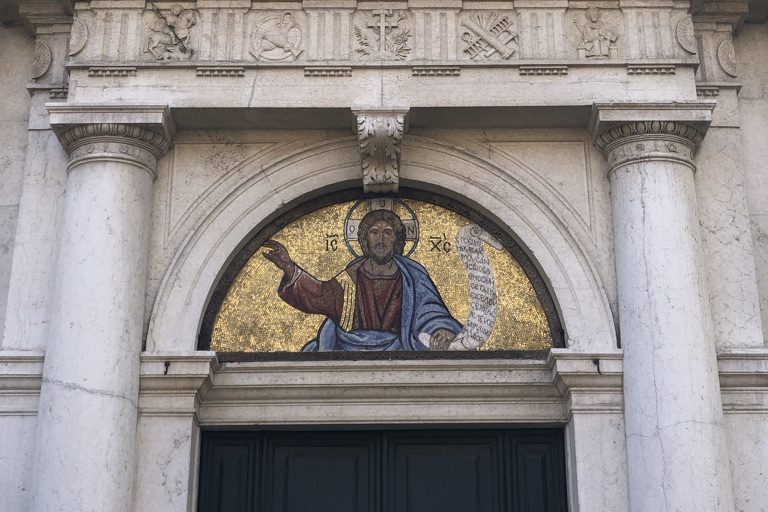
In 1511, the Greeks petitioned Venice’s Council of Ten to be able to purchase a site and build a church at their own expense. They complained that the church of San Biagio, near the Arsenale, where they were allowed to worship, was too small for their growing community and that “there is such a mixture of people, tongues, voices and services, both Greek and Latin … that it creates a confusion worse than that of Babylon”. In the petition, the Greeks described themselves as faithful servants of the Venetian state and “true and Catholic Christians”. As such they argued that they deserved treatment at least equal to other minority (non-Christian) communities in the city such as the Jews, who, although enclosed in the Ghetto after 1516, were allowed to construct their own synagogues there.
Although there was some resistance from leaders of the Venetian Church who considered the Greeks schismatics, permission was granted and the foundation stone of San Giorgio dei Greci was laid in 1536. The church was not completed until the 1570s, with the belltower added before the end of the sixteenth century. An important figure behind the movement that led to the building of the church was Anna Notaras Palaiologina, a member of the Byzantine nobility who had fled from the sack of Constantinople in 1453 and settled in Venice. As well as contributing 500 ducats for its eventual construction, Notaras left several precious Byzantine icons which she had brought with her to San Giorgio dei Greci. Some of these can now be seen in the museum of Byzantine icons next to the church. Both this museum, and the church itself, are well worth visiting.
Rosa Salzberg
Further reading
Ersie C. Burke, The Greeks of Venice, 1498-1600. Immigration, Settlement, and Integration. Turnhout, Belgium: Brepols, 2016.
David Chambers and Brian Pullan, eds. Venice: A Documentary History 1450 – 1630, Oxford: Blackwell, 1992, pp. 334-36. Orlando, Ermanno. Migrazioni mediterranee. Migranti, minoranze e matrimoni a Venezia nel basso Medioevo. Bologna: Il Mulino, 2014.
 HistoryCity Apps