
Confronting the past? Legacies of the civil war
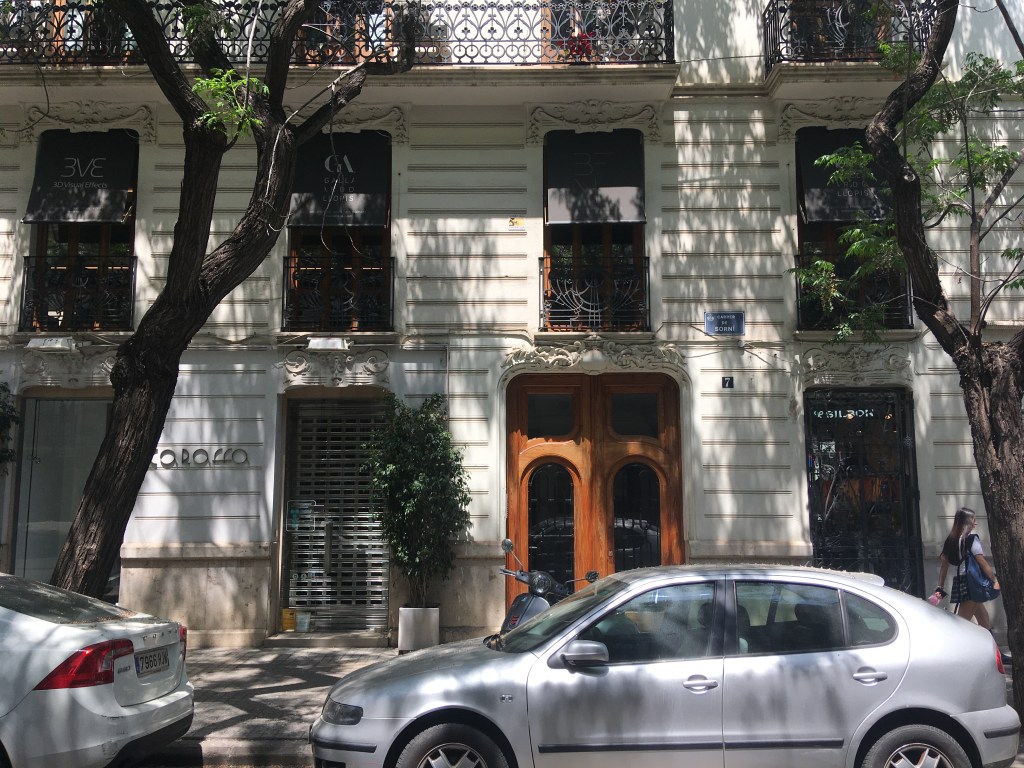
For all of the efforts of clandestine Francoists such as María/Lola in ‘Civil War Stories’ on the Hidden Valencia app, the Fifth Column did not win the war for Franco. Republican fears of a ‘stab in the back’ never materialised, partly because the Fifth Column’s primary role was providing military intelligence, not organising a rising. Nevertheless, the efforts of the Republican secret police in exposing subversion should not be dismissed.
The SIM, whose Valencia HQ were this site’s anonymous offices on Calle de Sorni, was noticeably successful in breaking up networks, even if they could never wipe out the Fifth Column. The SIM’s use of torture to extract information was very effective. This was a dirty war, and the ends justified the means. But its grisly reputation was both its greatest strength and greatest weakness. The SIM’s determination to defend the Republic remained undimmed despite continual military defeats in 1937-38, but its abuses and close association with Juan Negrín’s policy of resistance led those who dreamed of a negotiated peace to regard the SIM and the prime minister as ‘communist’ obstacles to an agreement with Franco. In March 1939, Colonel Casado overthrew Negrín and abolished the SIM, placing communist agents like Loreto Apéllaniz in jail. Apéllaniz and his brigade ended up in Francoist custody after Casado fled Spain at the end of the month without securing any guarantees from Franco.
The fact that Apéllaniz and his men were the first to be executed in post-war Valencia is indicative of the degree of Francoist hatred for the SIM. Its agents could expect no mercy: Ángel Pedrero, the head of the Madrid branch, was garrotted in 1940. The SIM remained a central feature of the Francoist narrative of ‘Stalinist Spain’ until the dictator died in 1975. To this day, the SIM remains under-researched, as some fear that investigating its crimes provides a patina of justification for the regime’s brutal repression. The Fifth Column is better studied, and the integral role of women in Francoist subversion has at last been recognised. Yet it is still true that the dominant image of a politically engaged woman in Republican Spain remains the miliciana, despite the fact that more women secretly fought against the Republic than fighting for it at the front.
However, Republican martyrdom not heroism is now the dominant public narrative of the civil war in Spain. This is largely a consequence of the remarkable efforts of the Recovery of Historical Memory movement. Since the dawn of the new millennium, its activists have not only exhumed the bodies of Republican victims, but given new life to the antifascist interpretation of a Republican war for democracy. The roots of modern Spanish democracy, it is argued, are not to be found in the current 1978 Constitution but in the Second Republic. SIM agents, once Stalinist stooges, are now steadfast defenders of democracy; Fifth Columnists, once saviours of Spain, are now fascists. Such claims have provoked a great deal of disquiet, and opposition is often seen as evidence of Spain’s inability to confront its dark past. However, it is possible to denounce Francoist atrocities and at the same time be critical of claims that antifascists fought for liberal democracy. The stories of the guide characters in this Hidden Valencia trail, Luis/Roberto and María/Lola, are fictional. The questions that their actions and beliefs raise are not. Nearly a century after the beginning of the Spanish civil war, the debates around the conflict show no sign of abating.
Julius Ruiz
Further reading
- Vicent Gabarda Cebellán, El cost humà de la repressió al País Valencià (1936-1956) (Universitat de València, 2020)
- Julius Ruiz, ‘A Spanish Genocide? Reflections on the Francoist Repression after the Spanish Civil War’ in Contemporary European History, 2005, Vol.14 (2), p.171-191
- Antonio Cazorla-Sánchez, ‘Revisiting the Legacy of the Spanish Civil War’ in International Journal of Iberian Studies 21(3), (2008), p. 231–46.
 HistoryCity Apps