
‘The Passion Quest’
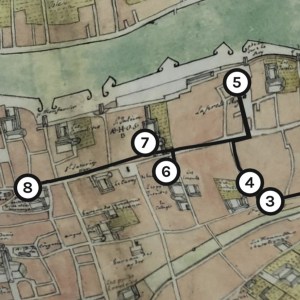
Tours, 1500. The city, one of the main residences of the French kings, is preparing for a lavish event, the royal entry of Louis XII and his new bride Anne of Brittany. Even more than usual, the city is buzzing with important visitors from France and abroad.
Your guide in Hidden Tours, ‘The Passion Quest’, is Jehane, based on the historical figure of Jehane Bernarde. Jehane is a young mother, in her mid-twenties, juggling childcare and running a stockings business with her husband Guillaume Pasquier. They were lucky to be able to rent a house and shop on a busy street near Saint Gatien’s cathedral, a place where all traffic passes as it comes across the only bridge into the city over the Loire river. The couple have to work hard to make ends meet, but Jehane still manages to take care of the education of her family, as well as reading books that nourish her Christian spirituality and love of stories.
We meet Jehane on the bridge over the Loire. She is on her way to deliver luxury stockings to the Count of Dunois, a relative of King Louis. However, as well as bringing the count his silk stockings, Jehane is hunting a book for her precious collection, a collection we know about because of the exceptionally detailed inventory of her home and business made after her death in 1516. Today, Jehane’s quest is to find a copy of the popular Passion of Christ, in French.
As you join Jehane in late medieval Tours, you will come across some of the sets under construction for the royal entry, and hear about the spectacular performances of sacred plays that will bring the streets to life. At the same time you will discover libraries, bookshops and street stalls, and explore the vibrant culture of buying, borrowing and reading books that permeated towns such as Tours in the course of the Middle Ages, increasingly so after the advent of the printing press.
Jehane’s possessions
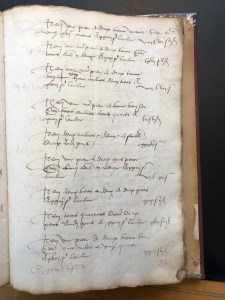
This is a page of the original document with the inventory of the possessions, debts, and credits of Jehane Bernarde from Tours, made after her death in February 1516. Her second husband, Jehan Jullien, and the children from her first marriage shared the goods left behind by Jehane. The parties were probably not on very friendly terms, because even used and incomplete objects were described painstakingly. Because of its level of detail, the inventory is highly informative about the objects present in a very modest artisan’s home and workshop in the early sixteenth century.
Stocking makers
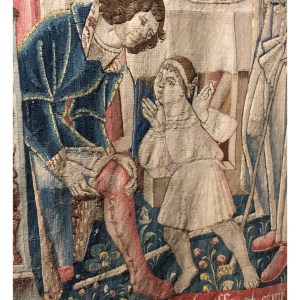
The fragments of stockings found during excavations at the Place Anatole France are very small. But this tapestry gives a good impression of the products made by artisans such as Jehane Bernarde and her husband. Late-medieval fashion for men typically consisted of short trousers worn with tight stockings. These were not knitted, but cut and sewn from woven material. Luxury stockings could be quite complicated, including laces and buttons so they could be worn tightly. They could be multicoloured, with pieces of velvet or even gold and silver silk.
Margriet Hoogvliet
 HistoryCity Apps