
‘Boats, Bridges, and Battles’
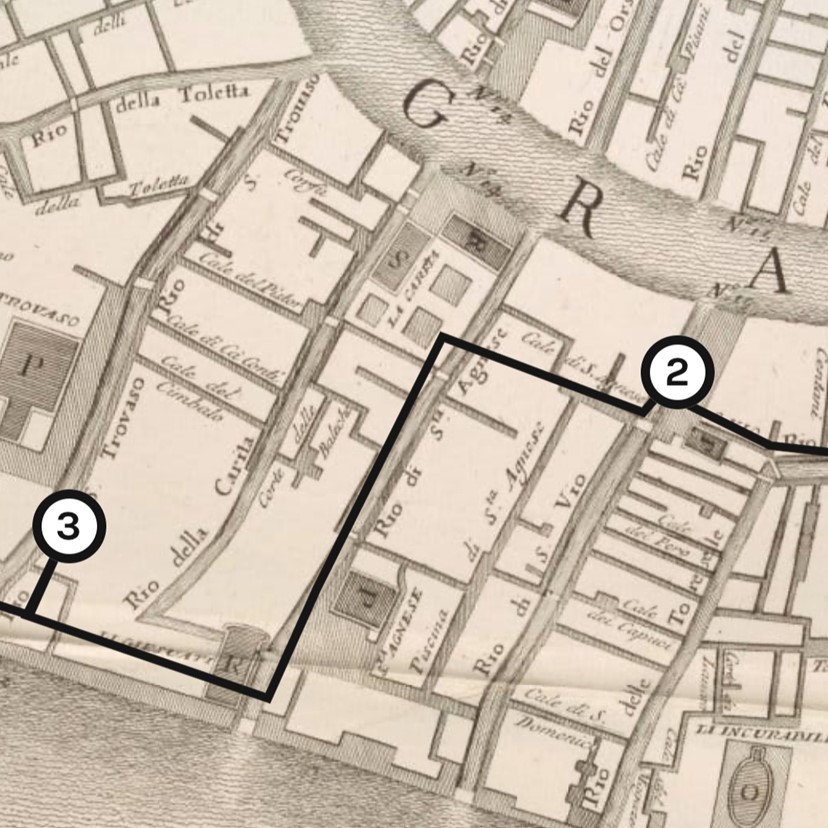
Workers in the Arsenale – such as Sebastiano in this Hidden Venice trail – contributed to the most essential industry in the city – the building and maintenance of the Republic’s many ships. These were vital for trade and warfare, and gave the city a dominant control over much of the eastern Mediterranean.
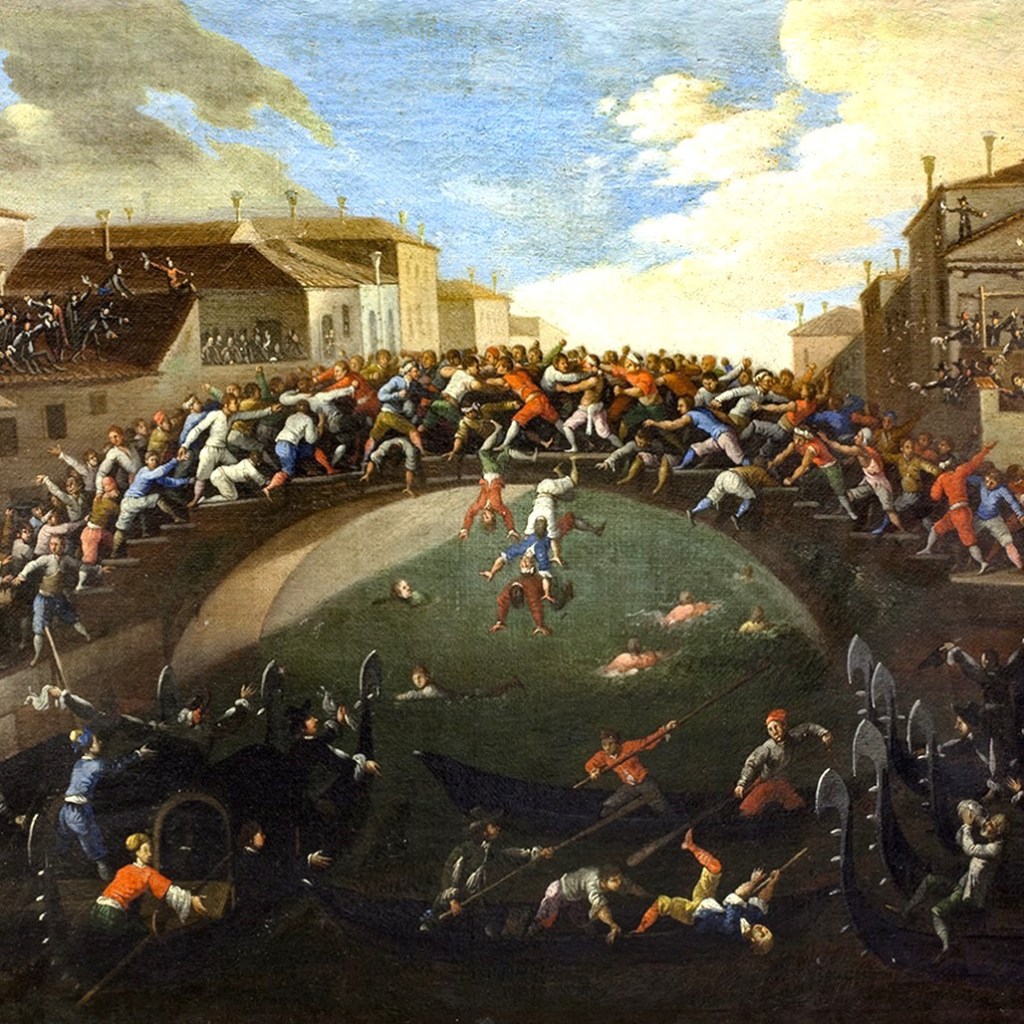
As an apprentice in the Arsenale, Sebastiano’s home is in the Castello area, where entire districts of worker housing provided stable accommodation for this relatively privileged group. Traditionally the city’s shipbuilders grouped together as ‘Castellani’ (residents of Castello – so named from the crenelations of the castle-like enclosure of the Arsenale). Their opponents they mockingly described as fishermen – the lagoon-bound Nicolotti (named for the church on the western edge of the city, San Nicolò dei Mendicoli). From time to time during the year these two factions would come together for ritual battles that took place on bridges that marked the borders between them, the so-called bridge battles (‘Battagliole sui ponti’).
These battles, public expressions of local and occupational honour, were always technically illegal, and in the early eighteenth century they were outlawed definitively, increasingly seen as little more than an excuse for dangerous, sometimes deadly, brawling – what today might be described as manifestations of toxic masculinity. But in the sixteenth and seventeenth centuries they were still viewed as a sort of sport, with patrons and spectators including both Venetian and visiting élites. To this day one bridge, between the Campo San Barnaba and Campo Santa Margherita, survives as trace of these bridge skirmishes: the Ponte dei Pugni.
Sebastiano’s trail, which ends at the Ponte dei Pugni, is set in 1639, when the bridge battles were in their heyday. This was only a few years after the devastating plague of 1630 that had ripped through the city, claiming thousands of lives. The memory of plague is still fresh, and the trail through Dorsoduro connects up a series of magnificent religious buildings erected to commemorate the city’s recovery from these destructive events. In fact the trail shows how devotional life was woven into the everyday existence of all pre-moderns: the city’s topography is peppered with churches but also with the streets shrines that were maintained by neighbourhood communities. These neighbourhoods gathered around the local campi – the Venetian names for squares – often in the vicinity of the water-pump on a well, the only supply of fresh water in the city. Narrow streets, and the more sociable open spaces around the wells contrast markedly with the large open promenade of the Zattere, that in 1639 would have been a busy working quayside from which essential supplies from the mainland were brought into the city, including water, food, and fuel.
In the trail, you’ll get a lively day-in-the-life view of the city, presented not by a member of one of the grand families that lived along the Grand Canal, but from the perspective, critically fictionalised, of an artisan who is familiar with all the back streets and alleyways, who knows where to hear fresh news, find a drink, and socialise. As well touching on some of Venice’s most impressive churches the trail reveals the story of many overlooked sites that are rarely given more than a passing look by traditional guides.
In the brief articles in these pages you can dive into the historical context at each of the eight sites on the ‘Boats, Bridges, and Battles’ trail.
Fabrizio Nevola
 HistoryCity Apps