
‘City of Refuge’
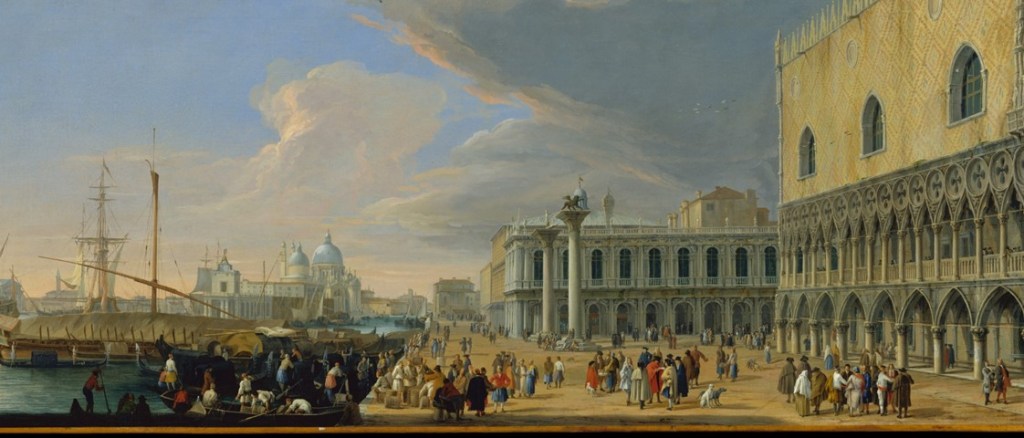
Venice, 1572. One of Europe’s wealthiest ports, where merchants from east and west trade in everything from luxury goods to everyday commodities. The city is also the hub of an empire, its economic power bolstered by its territorial reach – northwest onto the Italian mainland and east along the coast of what are now Croatia and Greece. This has brought Venice into conflict with the Ottoman Turks, who are intent on building their own empire.
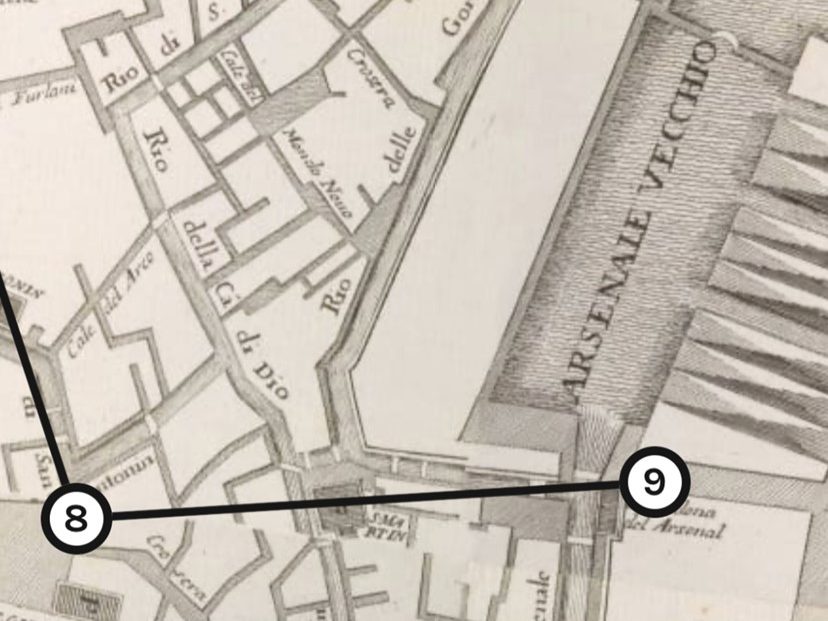
In the Hidden Venice app trail ‘City of Refuge’, you accompany Elena, one of the many Christian refugees to come to Venice as a result of Ottoman expansion. Thirty years ago, in 1540, Elena fled from Nauplion, one of the last Venetian strongholds in the Greek Peloponnese to fall to the Ottomans. Since then she has made a life for herself in Venice, first with her husband Dimitri, and now as a widow. She runs a lodging house in the city’s Castello district, beside the port, while her son Giorgio works in the Arsenale, the great shipyards of the Republic (today partly used for the Venice Biennale).
In the trail, Elena takes you through Castello: starting at the San Marco waterfront, Riva degli Schiavoni, heading towards the Greek Church of San Giorgio and the ‘Scuola’ of the Slavic community, and ending at the Arsenale, the shipyards of the Venetian Republic. She shows you a city of migrants, of refugees and of men and women who have come to find work in the booming urban economy – a city whose population has grown by half since the late fifteenth century.
In the brief articles in these pages you can dive deeper into the historical context at each of the nine sites on the ‘City of Refuge’ trail. Here you will get a fuller picture of what was one of Renaissance Europe’s most multicultural cities.
Rosa Salzberg
 HistoryCity Apps